Catalyzing Women Empowerment in Rural Pune

By
 Sterlite technologies Limited
February 22, 2020
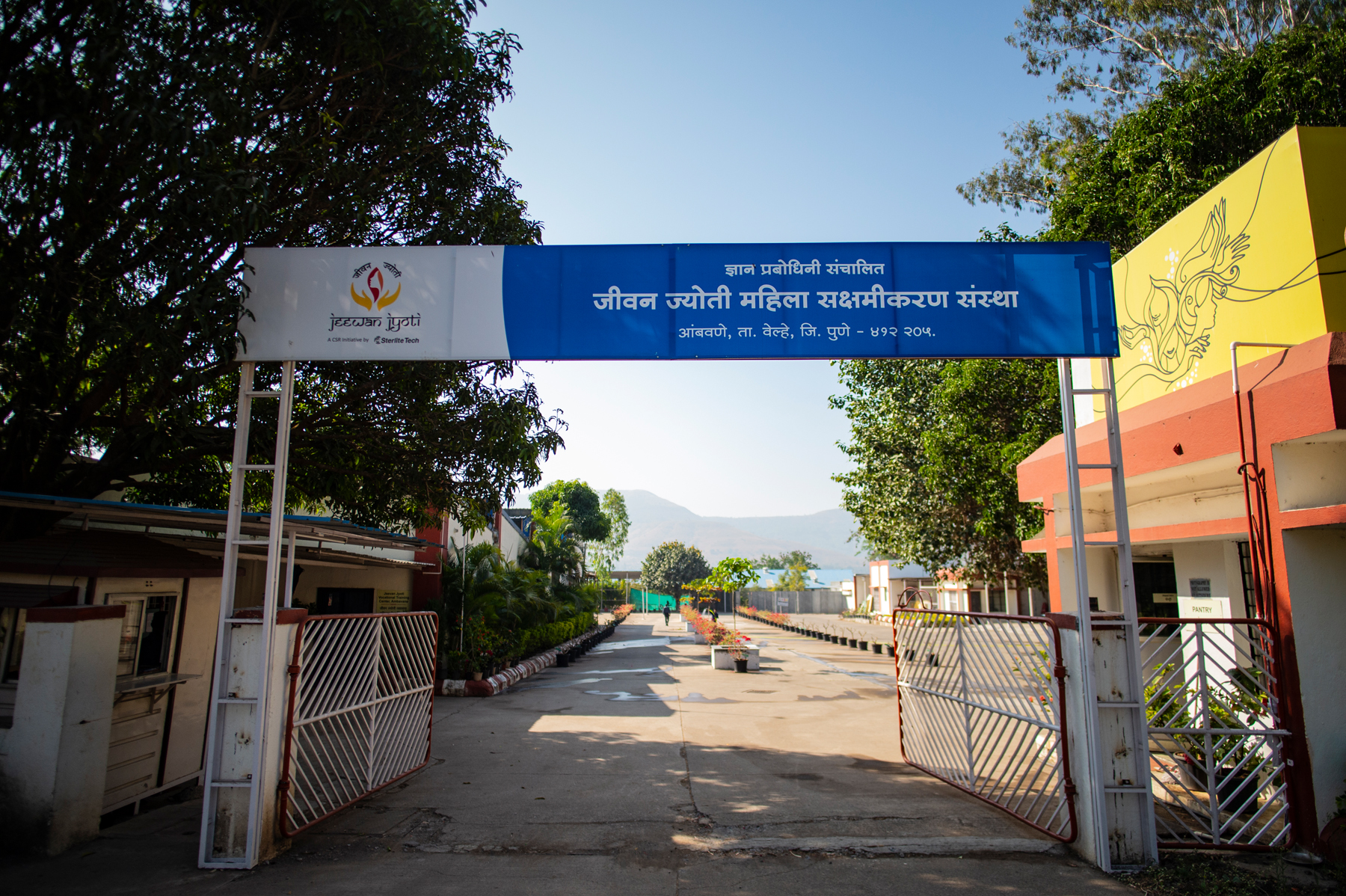
Jeewan Jyoti Mahila Sakshmikaran Sanstha
Villages in India are in stark contrast to the country’s urban areas where gender equality, education for the girl child, working and independent women are common effects. Additionally, rural women are plagued with layered challenges in various forms which can be attributed to patriarchal societies, poverty, early marriage and ignorance due to illiteracy. Freedom of choice, opinion and independence are a rarity even today for them. Moreover, the infrastructure and opportunities for education, up-skilling and vocational training are meager in most rural villages, especially for the female demographic. Their overall progress is thus adversely affected. They remain illiterate or receive only primary education and are generally treated poorly by the rest of the community on account of their dependent status.
Taking into consideration each of these aspects, STL initiated the Jeewan Jyoti Women Empowerment Programme in 2014 to help rural women in Pune emerge as self-confident and financially independent individuals.
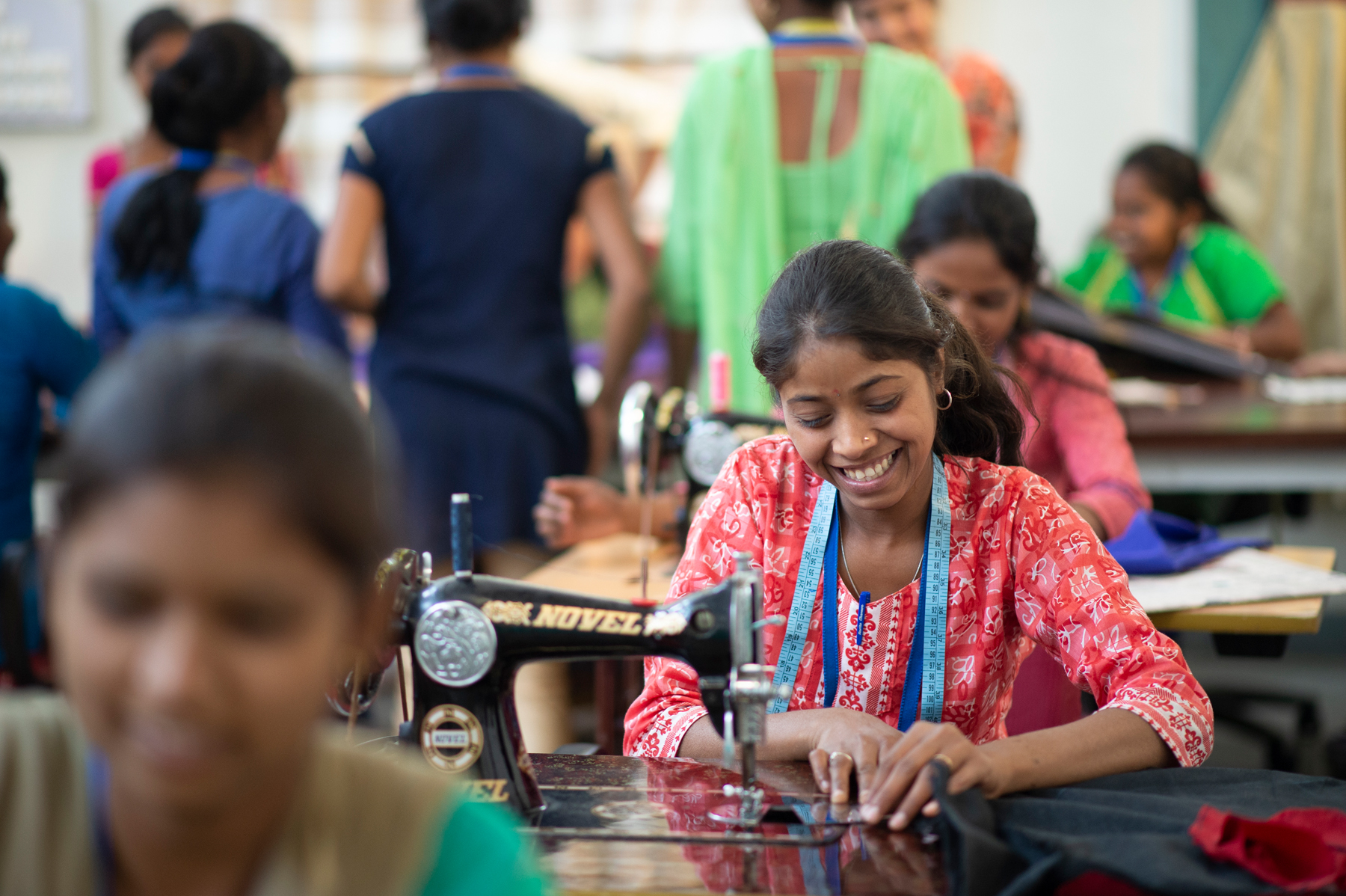
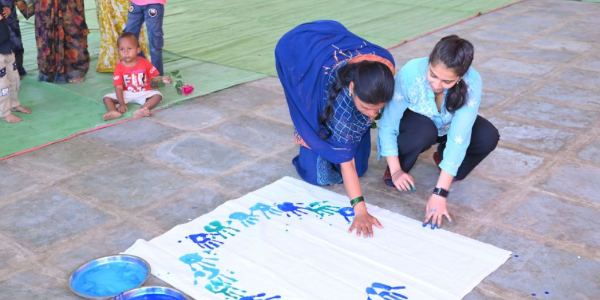
Vocational training imparted to women
“Before I had to ask my husband for money every single time, now I can fulfill our family’s needs myself. If I have money left over I put it in the bank. I have so much self-confidence now. Coming to the programme gave me the courage to stand up on my own and make the change I was looking for”. These are the words of Swati Ghore who now owns her own beauty parlor and is a Jeewan Jyoti Women Programme alumnus.
The Jeewan Jyoti Women Programme (JJWEP) has come a long way, from when it began in Ambavane in 2014. The villagers were extremely reluctant to send their daughters and wives to the programme for vocational training. The team visited each household to explain to them the benefits of sending the women of their families for vocational training. JJWEP began with just 95 students from 20 villages in2014. Today, over 2000 women have benefitted from the various interventions conducted through the programme. Students from over 100 villages across three districts of Bhor, Velhe and Haveli in Maharashtra have been trained for different vocations. The programme even went on to ensure that women were well equipped with other social skills and knowledge in order to expedite their holistic growth transforming them into self-reliant individuals.
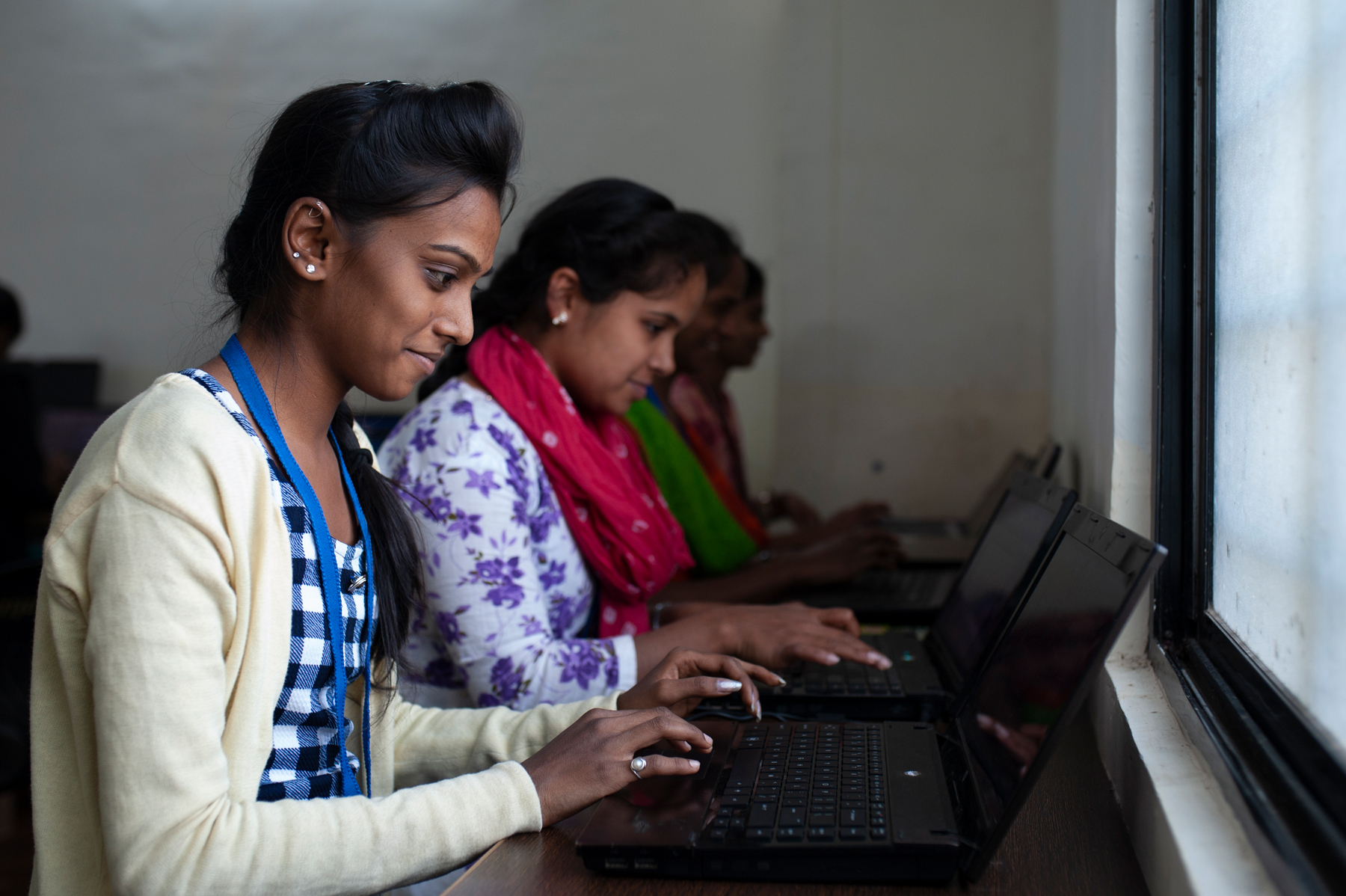
Opening a plethora of opportunities by providing digital literacy to women
STL, through JJWEP has gone on to introduce several new initiatives aimed at encouraging sustainable and viable income generation opportunities for women in rural Pune. By partnering with Amazon Saheli, the programme has given women artisans direct access to a country-wide customer base. This enables them to reach a much larger audience and accelerate their sales exponentially. To reach out to older and middle-aged women at the grassroots, STL partnered with MAVIM (Mahila Arthik Vikas Mahamandal) a nodal agency to the Government of Maharashtra. With their help, 50 self-help groups (SHGs) have been set up across 8 villages in Bhor. These SHGs have encouraged and trained over 700 women to leverage their agricultural lands to setup model farms anduse their agricultural and cooking skills, among others, to set up small enterprises. STL and MAVIM together have worked to create market and bank linkages for them thereby generating sustainable enterprises that pave the way for progressive prospects for the village.
The implementation of these schemes has helped several women find stable employment right at their villages and nearby. Many have started their own business and are looked upon as role models by other younger girls in their villages. This has also led to a significant behavioral change of villagers towards educating girls as well as working women. Nursing which was a career looked down upon due to caste implications are today highly sought after. Even the marriageable age of women in the region has increased from 16 years to over 20 years. Women today are able to share their opinions, have the freedom to dream big and even seize the opportunity to live those dreams!
As a result, these rural women, who had limited to no support, have now become active participants in their family’s decision making process and stand as an inspiration for other girls and women in their communities. Families are being more supportive of these women’s aspirations and are encouraging them to hone their skills and educate themselves. JJWEP has thus provided these rural women with the space and apparatus to break away from the shackles of patriarchy and become the light (Jyoti) of their own life (Jeewan).
If the story resonates with you, please share
Impact-Story is a series on development and CSR interventions leading to some impacts on the ground. If you have a project, innovation or intervention that has changed the lives of a few people or a community, please share a brief note at csr@ngobox.org. Our Team will get back to you after validating the information for a detailed coverage.

More Stories

CSRBOX is India’s leading CSR knowledge and impact intelligence driven media platform for the development community. It serves as an enabler, encouraging collaboration and partnerships between CSR stakeholders. Here, we connect and inform over three million professionals through our online platform, and bridge information gaps by providing a range of services for Corporate, NGOs and Social enterprises, to enhance their capacities, aid collaboration, plan projects, publish knowledge resources, conduct research, amplify their reach and much more.
Submit CSR News
Please submit your CSR news, CSR impact story ideas to us. Our Team will get back to you within 6-12 working hours. You can also email us at info@csrbox.org© Renalysis Consultants Pvt Ltd. All Rights Reserved | Powered by NGOBOX