Godrej Agrovet's CSR Initiative Supports Women Farmers Across Nine Cotton Districts

By
 CSRBOX
April 29, 2026
Godrej Agrovet
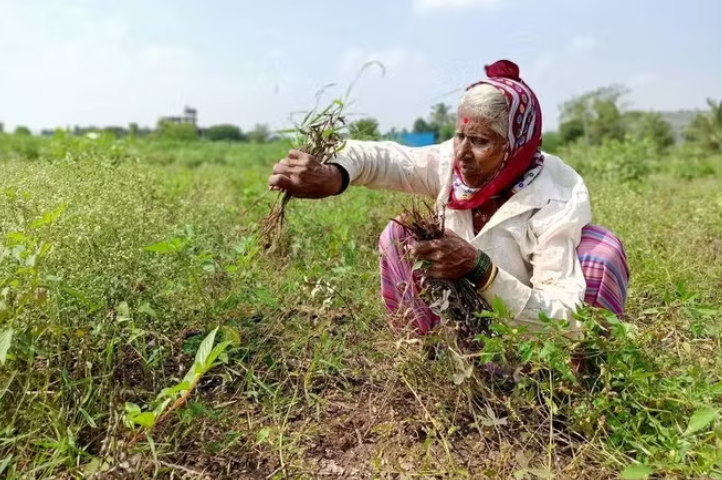
Across India’s agricultural landscape, women farmers play a vital yet often under-recognised role in sustaining farm productivity and rural economies. Despite their significant contribution, they frequently face barriers such as limited access to training, lack of exposure to scientific farming practices, and restricted participation in decision-making and market systems.
These challenges result in lower productivity, inefficient resource use, and reduced income stability for farming households. Addressing these systemic gaps requires structured interventions that combine technical knowledge, institutional support, and community participation.
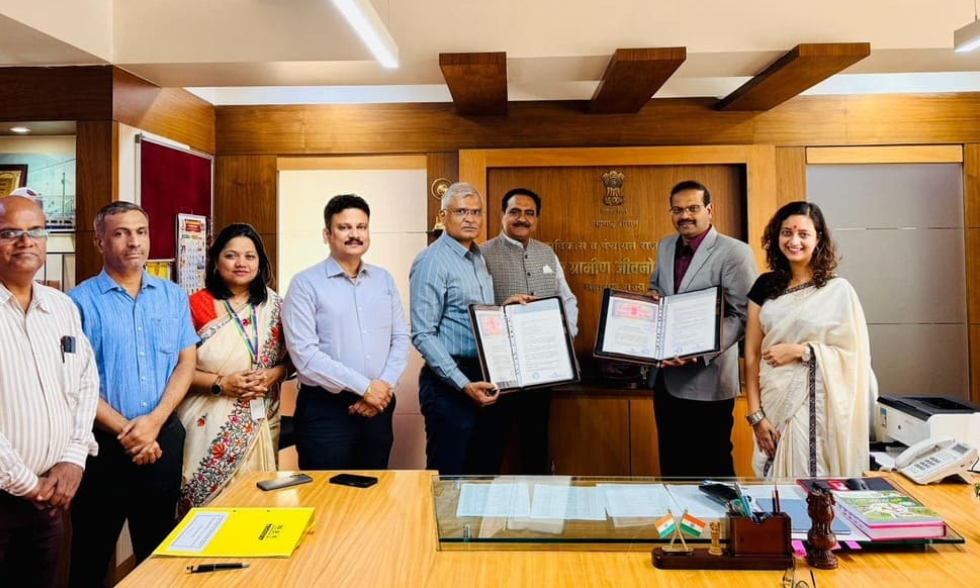
Responding to this need, Godrej Agrovet Limited has partnered with Maharashtra State Rural Livelihoods Mission to implement a large-scale initiative focused on empowering women farmers and promoting sustainable agricultural practices across Maharashtra.
The collaboration between Godrej Agrovet and MSRLM-UMED is designed as a three-year program that aims to bring long-term transformation in rural agricultural practices. It aligns with the global recognition of 2026 as the International Year of the Woman Farmer, which highlights the critical role women play in agrifood systems and emphasizes the need to reduce gender disparities in agriculture.
At the core of the initiative is the mobilization of Self-Help Groups and women farmers into a structured framework where knowledge sharing, training, and community-led implementation become key drivers of change. By focusing on Good Agricultural Practices and Integrated Pest Management, the program introduces women farmers to methods that are both scientifically sound and practically applicable.
This structured collaboration ensures that the initiative is not limited to awareness generation but extends to actual adoption of improved farming techniques. The integration of institutional networks with technical expertise creates a strong foundation for sustained impact. It also enables consistent monitoring and support, ensuring that farmers are able to apply what they learn in real farm conditions.
The program also recognizes the importance of building confidence and leadership among women farmers. By involving them directly in training sessions, group activities, and decision-making processes, the initiative contributes to strengthening their role within both the agricultural ecosystem and their communities.
Maharashtra is one of India’s key cotton-producing states, and many of its cotton-growing regions face challenges such as pest infestations, unpredictable climatic conditions, and inconsistent adoption of modern farming practices.
The initiative strategically focuses on nine important districts including Nagpur, Amravati, Yavatmal, Washim, Parbhani, Jalgaon, Beed, Akola, and Nanded, where targeted interventions can deliver meaningful outcomes.
In the first year, the program is set to benefit more than 5,000 women farmers and cover over 50,000 acres of farmland. Each district will engage approximately 100 Self-Help Groups, creating a strong grassroots network that supports implementation and ensures last-mile reach.
The scale of the initiative reflects a well-planned approach that combines geographic focus with community mobilisation. By concentrating efforts in key cotton districts, the program is able to address region-specific challenges while building a model that can later be expanded to other crops and regions.
Over the three-year period, the initiative aims to extend its reach to over 5,000 Self-Help Groups across Maharashtra. The planned expansion beyond cotton to crops such as maize indicates a long-term vision that goes beyond immediate gains and focuses on creating a diversified and resilient agricultural ecosystem.
A central pillar of the initiative is its focus on capacity building through practical and field-oriented learning methods. Training workshops are being conducted to introduce women farmers to Good Agricultural Practices, Integrated Pest Management, and essential safety measures. These sessions are designed to be interactive and accessible, ensuring that participants can easily understand and implement the techniques in their own fields.
Farmer field schools and demonstration plots form an important component of the program. These on-ground learning platforms allow farmers to observe the benefits of improved practices in real time. By seeing tangible results such as better crop health and reduced pest damage, farmers are more likely to adopt these practices on a sustained basis.
The distribution of safety kits further strengthens the initiative’s focus on responsible farming. By equipping farmers with the necessary tools and knowledge to handle crop protection products safely, the program contributes to improved health outcomes and environmental sustainability.
The roles of the two partners are clearly defined, ensuring efficient execution. MSRLM-UMED leverages its extensive network of Self-Help Groups and Krishi Sakhi facilitators to mobilize and coordinate farmers.
This grassroots presence ensures that the program reaches the intended beneficiaries effectively. Godrej Agrovet, on the other hand, brings in technical expertise, resources, and implementation capabilities, enabling the delivery of structured training and support systems.
This combination of local networks and technical know-how ensures that the initiative is both scalable and impactful. It also creates a strong feedback loop where learnings from the field can be continuously incorporated into program design.
The initiative is already creating a meaningful impact by addressing critical gaps in knowledge, productivity, and sustainability. Women farmers are gaining access to scientific farming techniques that help improve crop yields and optimise resource use. The adoption of Integrated Pest Management practices is reducing dependency on excessive chemical inputs, leading to more sustainable farming systems.
Improved awareness of safety practices is contributing to better handling of agricultural inputs, reducing health risks and promoting responsible usage. These changes not only enhance farm productivity but also improve the overall quality of life for farming families.
At the community level, the program is strengthening the role of Self-Help Groups as platforms for collective action and knowledge sharing. Women farmers are becoming more confident in managing their farms and participating in agricultural decision-making processes. This shift is contributing to greater financial independence and social empowerment.
The initiative is also helping build resilience against external challenges such as climate variability and market fluctuations. By equipping farmers with knowledge and practical tools, it enables them to make informed decisions and adapt to changing conditions.
Importantly, the program is creating a replicable model that integrates training, field support, and institutional collaboration. This model has the potential to be adapted and implemented in other regions, extending its impact beyond the initial set of districts.
Looking ahead, the partnership between Godrej Agrovet and MSRLM-UMED is expected to evolve into a comprehensive framework for inclusive agricultural development. The planned expansion to additional districts and crops will further strengthen its reach and impact.
Future efforts will focus on deepening the adoption of scientific practices, strengthening market linkages, and enhancing the economic outcomes for women farmers. There is also potential to integrate digital tools and data-driven approaches to improve monitoring, advisory services, and decision-making at the farm level.
The initiative underscores the importance of collaboration between corporate entities and public institutions in addressing complex rural challenges. By combining technical expertise with grassroots networks, it demonstrates how scalable solutions can be developed to drive sustainable and inclusive growth.
As the program progresses, it is likely to play a significant role in transforming agricultural practices, improving livelihoods, and empowering women farmers across Maharashtra. Its emphasis on knowledge, sustainability, and community participation positions it as a strong example of how targeted interventions can create long-term impact in rural India.

More Stories

CSRBOX is India’s leading CSR knowledge and impact intelligence driven media platform for the development community. It serves as an enabler, encouraging collaboration and partnerships between CSR stakeholders. Here, we connect and inform over three million professionals through our online platform, and bridge information gaps by providing a range of services for Corporate, NGOs and Social enterprises, to enhance their capacities, aid collaboration, plan projects, publish knowledge resources, conduct research, amplify their reach and much more.
Submit CSR News
Please submit your CSR news, CSR impact story ideas to us. Our Team will get back to you within 6-12 working hours. You can also email us at info@csrbox.org© Renalysis Consultants Pvt Ltd. All Rights Reserved | Powered by NGOBOX