Mahindra’s ‘Rise for Safe Roads’ aims for Zero Fatality

May 5, 2018
Picture Credit: Mahindra & Mahindra Limited
India unfortunately records the highest number of road accident deaths in the world with 16 deaths recorded every hour on an average. In the past decade, over one million people were killed in road accidents in India and over five million were seriously injured or permanently disabled. In India road accidents are the single biggest killer of young people, aged between 15 and 45 years. Not only do they exact severe emotional trauma on thousands of families every year, they also cause an annual economic loss of at least 3 percent of India’s GDP.
According to data collected from the Maharashtra Highway Safety Patrol from 2011 to 2015, there were 941 recorded road crashes on the Mumbai-Pune Expressway (MPEW), which resulted in 641 fatalities and 1,098 injuries. The Expressway handles around 43,000 passenger car units per day. Through extensive investigations and data analysis, fifteen infrastructure risk factors, seven human risk factors and seven vehicular risk factors were identified that contribute to road crashes on the MPEW. The accident severity is 76.6, i.e., 76.6 deaths per 100 accidents, which is well above the national average.
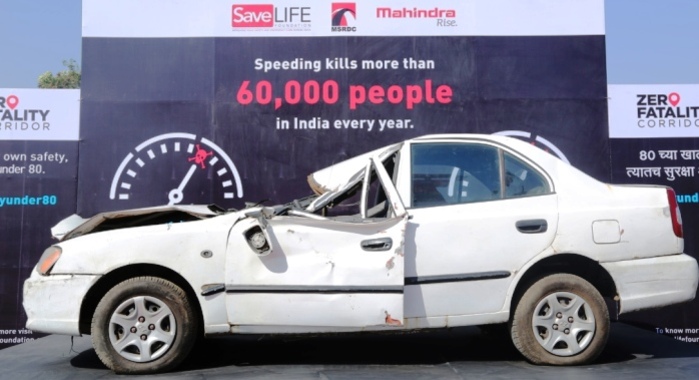
Mahindra & Mahindra Limited’s (M&M) business strategy has conventionally got a strong social component firmly embedded in it and it implements a range of social projects through its CSR program across the country. Their partnership with SaveLIFE Foundation (SLF), a non-profit non-government organization committed to improving road safety in India, was initiated to execute an innovative project, titled ‘Rise For Safe Roads’. The project has two broad objectives
i) reduce the number of road crash deaths on the Mumbai-Pune Expressway (MPEW) by converting it into a ‘Zero Fatality Corridor’ by the year 2020
ii) train 5,000 commercial drivers in techniques of anticipatory driving to enable them to avoid accidents
The first objective includes ensuring completion of the engineering interventions and monitoring the trend as a result of it. The MPEW Zero Fatality Corridor (ZFC) Initiative is a pioneering attempt to reduce the number of road crash deaths on the MPEW from an annual average of 140 people to 0 by 2020. The ZFC project is implemented through a 360 degree solution across the 4 Es of road safety - Engineering, Enforcement, Emergency Care and Education.
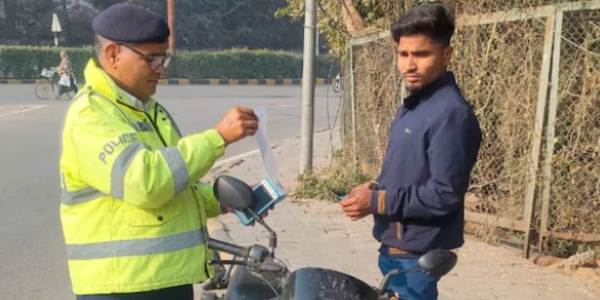
For Engineering interventions, the project is being implemented with the Maharashtra State Road Development Corporation (MSRDC), Ideal Road Builders (IRB) and JP Research India to implement a Safe System Approach to ensure that road infrastructure is forgiving and minimizes the impact of a crash. Under Enforcement, work is being undertaken with the Maharashtra Home Department and Maharashtra Highway Police to improve enforcement on the expressway. In Emergency Care, D.Y. Patil University, BVG Group and IRB on the MPEW have been brought on board to build an effective ‘Chain of Survival’. Under Education, one of India’s premier communication agencies, Ogilvy & Mather, has been engaged to implement innovative communication campaigns to build ownership of the project among commuters of the MPEW.
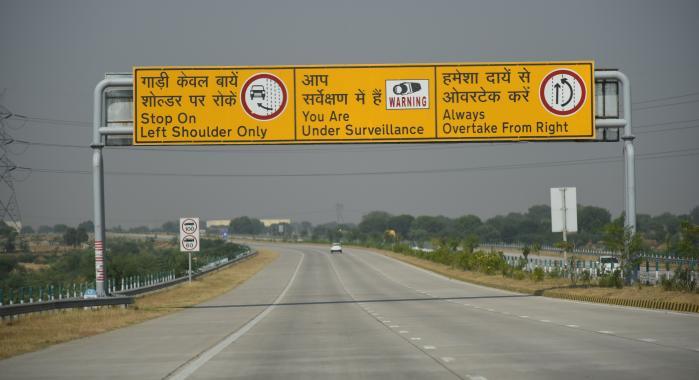
From the Police data, it emerged that between January and June 2016, there was an average of 14 road crash fatalities on the Mumbai-Pune Expressway every month. During the same period in 2017, after the launch of the Rise For Safe Roads project in February 2016, the average number of fatalities on the Mumbai-Pune Expressway reduced to 8 fatalities every month – over 40 percent reduction in average monthly road crash fatalities on the expressway. Moreover through the project, installation of over 40 km of Metal Beam Crash Barriers and over 20 km of Wire Rope Safety Barriers, road signage, road markings, removal of vision obstructers and safety-proofing of existing road infrastructure was done. This has led to the reduction in fatalities.
To improve on-ground care and in-ambulance care, the Government of Maharashtra was convinced to place five 108 ambulances on the MPEW, which include three Basic Life Support (BLS) and two Advanced Life Support (ALS) ambulances. These ambulances have better equipment and trained doctors as compared to ambulances stationed on the expressway. The 108 ambulances are operational on the MPEW and are being used to provide care to victims of road accidents and other medical emergencies on the expressway and surrounding areas.
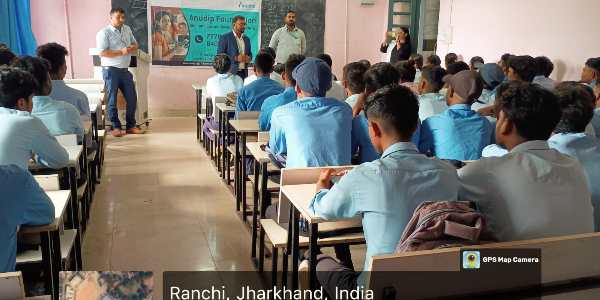
The second objective of the project is the Anticipatory Driving and Accident Prevention Training (ADAPT) program. The program trains high-risk commercial drivers to cope with day-to-day situations and risk factors that they encounter on the road. The training program was developed after two years of research on risk factors faced by commercial drivers and causes of crashes. These findings were mapped with best practices in anticipatory driving to create a module that trains drivers to anticipate and manage the six core risk factors that they are likely to encounter on the road. Till date 2,194 drivers have been trained under ADAPT.
Since the Rise For Safe Roads project covers a long stretch of 94.5 km connecting Mumbai and Pune comprising the cities of Panvel, Khandala and Lonavala, the scope of the project is huge. Mahindra & Mahindra Limited’s (M&M) plans to solely focus on this project till 2020 for first-rate and quality execution. Post the successful implementation here the organization hopes to replicate the project in other locations across India so as to build safer roads for commuters.
Impact-Story is a series on development and CSR interventions leading to some impacts on the ground. If you have a project, innovation or intervention that has changed the lives of a few people or a community, please share a brief note at csr@ngobox.org. Our Team will get back to you after validating the information for a detailed coverage.


More Stories

CSRBOX is India’s leading CSR knowledge and impact intelligence driven media platform for the development community. It serves as an enabler, encouraging collaboration and partnerships between CSR stakeholders. Here, we connect and inform over three million professionals through our online platform, and bridge information gaps by providing a range of services for Corporate, NGOs and Social enterprises, to enhance their capacities, aid collaboration, plan projects, publish knowledge resources, conduct research, amplify their reach and much more.
Submit CSR News
Please submit your CSR news, CSR impact story ideas to us. Our Team will get back to you within 6-12 working hours. You can also email us at info@csrbox.org© Renalysis Consultants Pvt Ltd. All Rights Reserved | Powered by NGOBOX