Non-Forest Livelihoods successfully reduce forest dependency in Manas

By
 Dr. Bibhuti Prasad Lahkar, Aaranyak, Assam
May 5, 2020
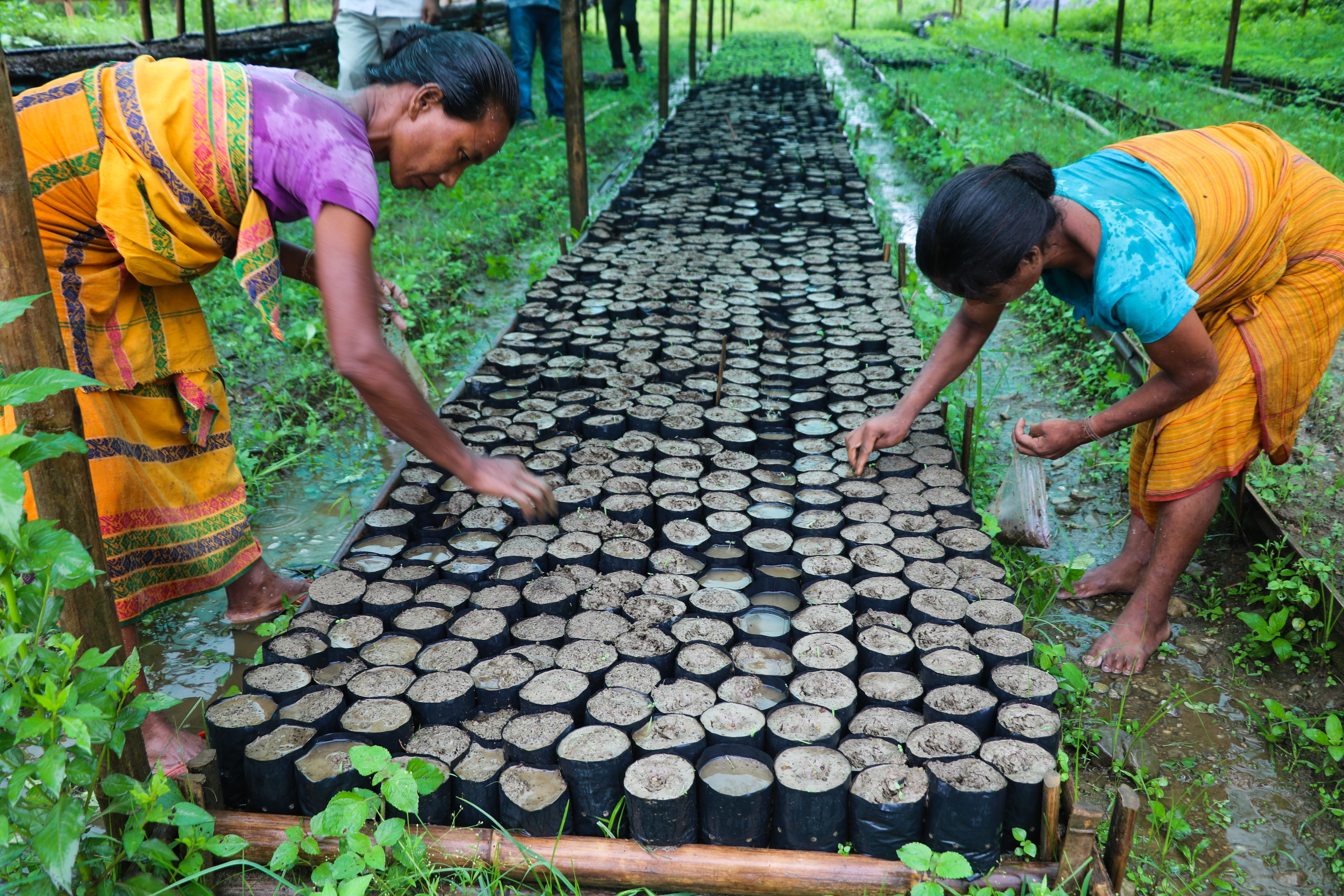
Villagers working on their homestead garden
Manas National Park is probably the only National Park in India adorned with five wildlife recognition. Apart from being a National Park it is also a Tiger Reserve, a Wildlife Sanctuary, a Biosphere Reserve and an Elephant Reserve. Moreover UNESCO has recognised it as the Natural World Heritage Site. Besides it cuts across the Indo-Bhutan International Boundary. With so many feathers to its crown the fringe villages of the National Park must have been doing well economically and socially. But a larger population of these villages are still dependent on the forest resources for their livelihoods. There are more than 50 villages on the fringes of the park distributed among the three ranges of the park Panbari, Bansbari and Bhuyapara. The problems faced by each of these villages vary from one another and are vulnerable equally. According to media reports most of these villages have been deprived of basic life-sustaining infrastructure like schools, electricity, health centres, water, roads and sanitation. Moreover age old practices and lack of occupation and other such limitations force the villagers to often encroach the protected areas of the park to collect firewood which lead to destruction of the wildlife habitat. Poaching and hunting has also been rampant for years. Health issues are also unchecked in these areas, with a large chunk of population falling prey to malaria and dysentery.
Observing such atrocities Aaranyak came on board to help these villagers by providing them a sustainable way of livelihood. The idea was to decrease their direct dependency on the forest resources. Ranging from fishery farming and dairy farming to bee-keeping and weaving, the locals were being trained in activities that will help in making them self-sufficient. Livestock training, homestead garden development, homestead pond based fishery were some of the potential activities in these villages. The objective of these trainings was to prepare those living on the fringes of MNP in earning their livelihood. The local communities were also being engaged to step up anti-poaching efforts so that the wildlife can flourish and they can also earn their living.
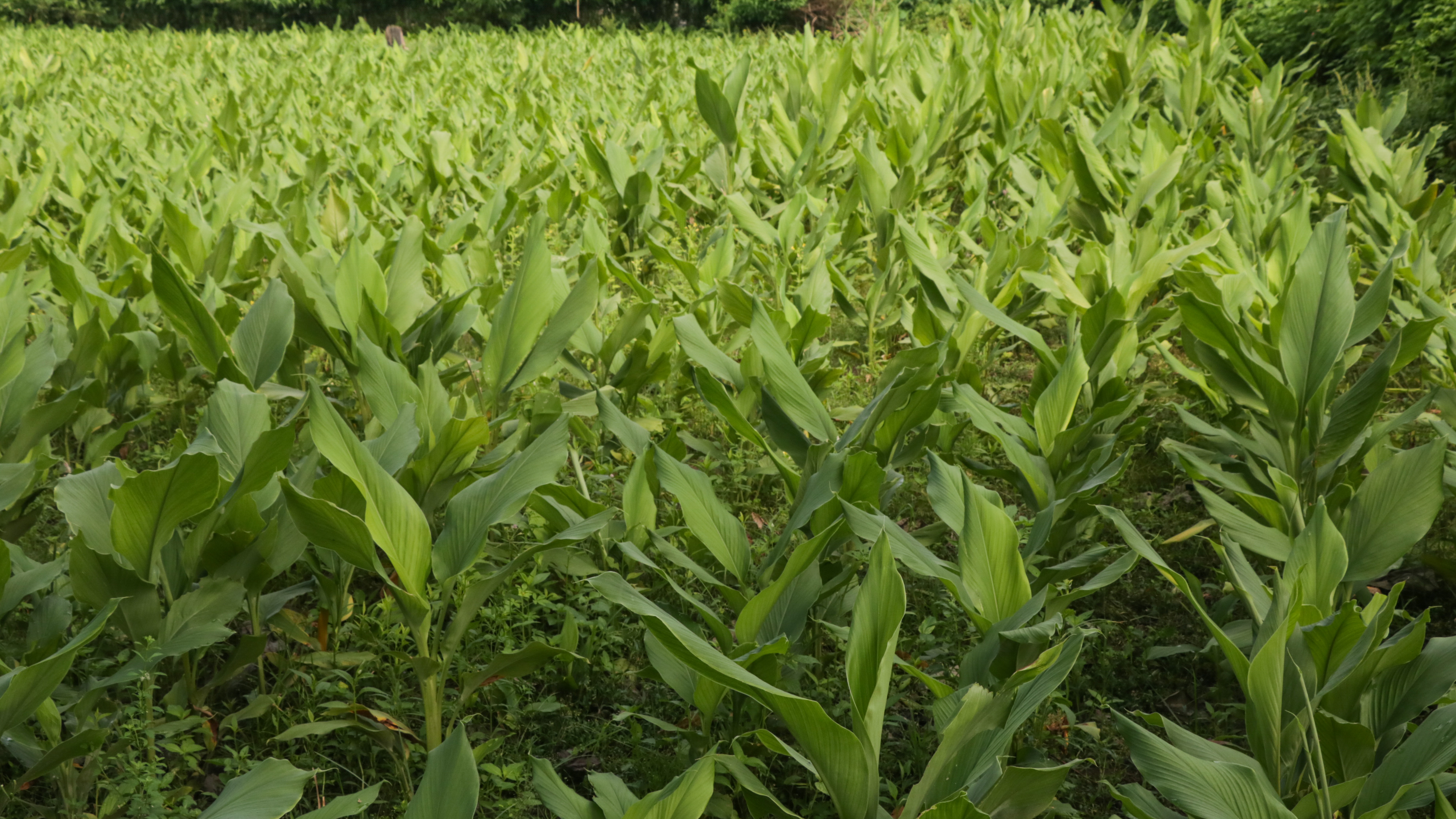 Agro-Forestry Initiatives
Sotrasen Basumatary and Ranjita Basumatary, one of the households among the fourteen hundred households were trained in some of these agro-forestry activities. The duo were earlier dependent on firewood collected from the forest with an income of Rs. 500 per week. With the help of Aaranyak they were exposed to goat farming (cattle rearing), mushroom cultivation and organic homestead garden. With the constant guidance and monitoring of Aaranyak they were finally able to sell the goats and agricultural products in the local markets. The family now has an income of Rs. 2500 per week. Sotrasen Basumatry has also successfully expanded his business to selling grocery items investing from the savings he makes by selling goats and the mushroom. As many as fourteen hundred household were catered with alternate livelihood occupation by Manas Tiger Conservation Programme of Aaranyak reducing their dependency on the forest resources. This shift to non-forest livelihoods has also reduced the man-animal conflict in these areas and stopped the villagers from denuding the forest cover of the National Park.
Another beneficiary from the area said, ‘After receiving training from Aaranyak, we have been able to increase our production. Now we sell around 25 kilos of potato, lady’s finger, cucumber. We also now supply these vegetable to the schools nearby’. Another beneficiary said, ‘We are glad that Aaranyak is guiding us to understand the importance of the forest and we have stopped entering the forest now. We wish that Aaranyak continues to work with us in the future.’
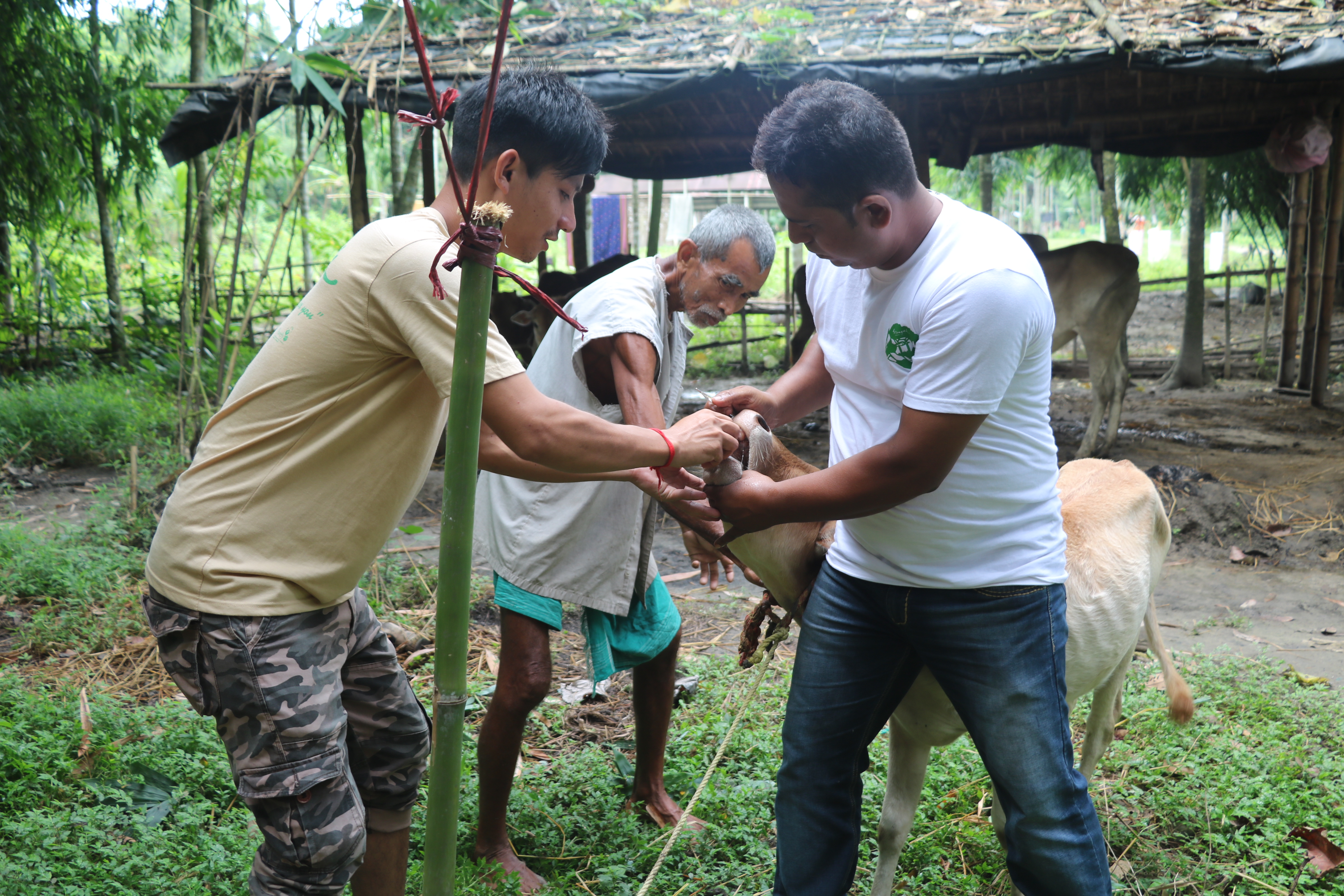 Livelihood opportunities in form of livestock
More and more villagers are engaging themselves in such livelihood occupation. Also as the tourism scenario is improving in Manas it is necessary that these locals are trained in such areas also. Local handicrafts can also be further enhanced as it was done by Aaranyak for natural thread dying in the past.
Manas Tiger Conservation Programme – initiative of Aaranyak, Forest Department of Bodoland Territorial Council, Panthera, Wildlife Conservation Trust of India and Awely
Supported by: German Development Bank, IUCN KFW
If the story resonates with you, please share
Impact-Story is a series on development and CSR interventions leading to some impacts on the ground. If you have a project, innovation or intervention that has changed the lives of a few people or a community, please share a brief note at csr@ngobox.org. Our Team will get back to you after validating the information for a detailed coverage.

More Stories

CSRBOX is India’s leading CSR knowledge and impact intelligence driven media platform for the development community. It serves as an enabler, encouraging collaboration and partnerships between CSR stakeholders. Here, we connect and inform over three million professionals through our online platform, and bridge information gaps by providing a range of services for Corporate, NGOs and Social enterprises, to enhance their capacities, aid collaboration, plan projects, publish knowledge resources, conduct research, amplify their reach and much more.
Submit CSR News
Please submit your CSR news, CSR impact story ideas to us. Our Team will get back to you within 6-12 working hours. You can also email us at info@csrbox.org© Renalysis Consultants Pvt Ltd. All Rights Reserved | Powered by NGOBOX