Project Samriddhi – Transforming the lives of over 4000+ adolescent girls.

February 16, 2019
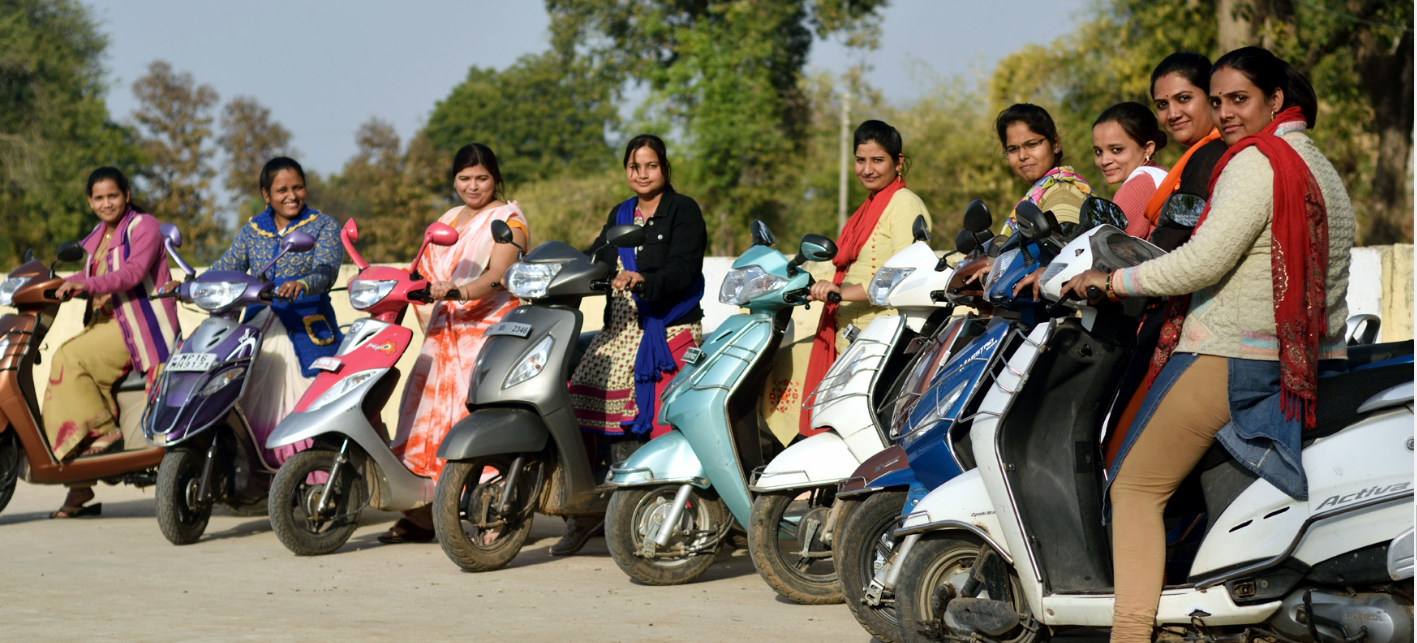
Cluster Coordinators - Ordinary women driving the change
This project is the journey of adolescent girls in the tribal villages of Madhya Pradesh who are challenging the status quo to build a new future, one opportunity at a time.
‘Project Samriddhi’ – Investing in the prosperity of adolescent girls was launched at Chhatarpur in the State of Madhya Pradesh. Chhatarpur was selected as the project launch site as the key health indicators were lower than the state average, a large percentage of the marginalized tribal population resided in the area and the district comes under Government of India’s high priority district. Samriddhi covers 150 villages in the Bijawar and Badamalhara blocks of Chhatarpur District. In the first year of implementation, the project has set up the vital foundation for change: A network of 15 able and committed Cluster Coordinators, who are, in turn, transforming the lives of over 4000.
A project that Focuses on adolescent girls in Chhatarpur
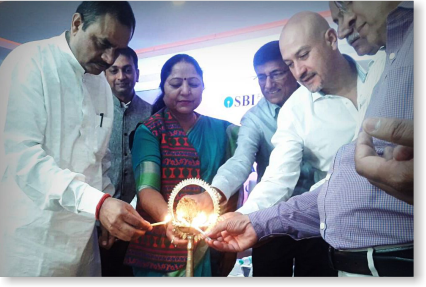
The project is a 3-year partnership between SBI Foundation and UNFPA which begun on 27th January 2017. It was officially launched on May 5, 2017, at District Headquarter of Chhatarpur by Smt. Lalita Yadav, Hon’ble State Minister WCD. The launch brought together stakeholders from UNFPA, the State Bank of India Foundation (SBIF), Dharti Sanstha, and the government – creating media visibility as well as convergence between various stakeholders.
Adolescent girls are often deprived of rights and equal opportunities for their overall growth and development. Continuing gender disparities, socio-cultural practices, and patriarchal attitudes bar them from making informed life choices. The absence of sexual and reproductive healthcare services poses a number of challenges for young girls. Girls often drop out of school once they attain puberty. In many cases, they are also pushed to early marriage and child-bearing.
In the case of the Bundelkhand region of Madhya Pradesh, this is particularly true. Many villages there are still waiting for development. Poor social indicators of education, health, and economic status, coupled with gender stereotypes and discriminatory attitudes, play out adversely in the lives of young people, especially, adolescent girls. Data from the 2005-06 National Family Health Survey show that 41 percent of girls under the age of 19 are married in Chhatarpur.
Year One of the Project (April 2017- March 2018)
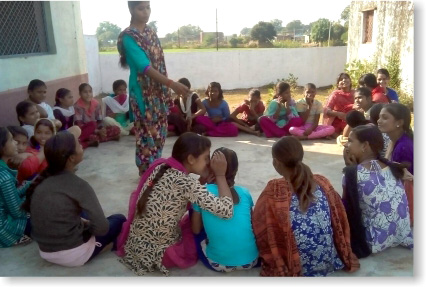
Peer Meetings- an ideal training ground for adolescent girls
Converting a well thought out project into an impactful initiative that drives significant change in the field is a tough task, but Project Samriddhi passed this hurdle with ease. It required a comprehensive environment-building exercise, beginning with the mapping of key players in the eco-system and figuring out how these players could directly or indirectly affect the core objectives.
A core team was formed following the baseline survey which helped them map the exact number of girls and understand each one’s dreams and aspirations. In order to assess the ground realities in the project villages, the baseline survey was conducted by the International Institute for Population Sciences (IIPS), Mumbai, one of the premier population research institutes in India. With the project envisioned for three years, the baseline findings helped map sequential and strategic milestones for each year.
The NGO partner, Dharti Sanstha was brought on board. Project staff was recruited and an initial round of training was conducted for the staff. The project was led by a Project Manager, supported by one Block Coordinator and fifteen Cluster Coordinators each in Bijawar and Bada Malehra. The 15 cluster coordinators were ordinary village women. Now, 10 of them ride scooters to lead the process of change.
In order to facilitate both ground and senior-level advocacy, a number of workshops, orientations, and training were conducted for not just the project staff, but also government officials from various departments, ASHA Workers, ASHA Sahyogis, and Anganwadi Workers.
The 1000+ monthly peer meetings were the ideal training ground for adolescent leaders to emerge as tomorrow’s cluster coordinators. Efforts were also made to engage village elders and panchayats so that these influential persons could act as the local point-of-support for young girls to address gender discriminatory practices. Today, such people form a strong network of support for Samriddhi – both, in the project villages, as well as, at the block and district levels.
Dr. Nilesh Deshpande, State Programme Coordinator – UNFPA says ‘Our endeavor is to enable adolescent girls to make informed decisions, complete their schooling and even opt for higher education if they wish to.’
Shama Bano, one of the cluster coordinator from Devra cluster says- ‘In the rallies, we saw the participation of men and boys alongside women and girls- a positive shift in the environment.’
The standout point of ‘Project Samriddhi’ is its linkages with Government programmes. These collaborations maximize the outreach of these initiatives.
Impact-Story is a series on development and CSR interventions leading to some impacts on the ground. If you have a project, innovation or intervention that has changed the lives of a few people or a community, please share a brief note at csr@ngobox.org. Our Team will get back to you after validating the information for a detailed coverage. For more information, please visit indiacsrsummit.in

More Stories

CSRBOX is India’s leading CSR knowledge and impact intelligence driven media platform for the development community. It serves as an enabler, encouraging collaboration and partnerships between CSR stakeholders. Here, we connect and inform over three million professionals through our online platform, and bridge information gaps by providing a range of services for Corporate, NGOs and Social enterprises, to enhance their capacities, aid collaboration, plan projects, publish knowledge resources, conduct research, amplify their reach and much more.
Submit CSR News
Please submit your CSR news, CSR impact story ideas to us. Our Team will get back to you within 6-12 working hours. You can also email us at info@csrbox.org© Renalysis Consultants Pvt Ltd. All Rights Reserved | Powered by NGOBOX