Project Shiksha: Empowering & Encouraging Siksha in Government Schools by Hero MotoCorp Limited

By
 Smita Singh
January 28, 2021
CSRBOX
Poor quality, insufficient classrooms, inadequate teachers, local language as a mode of communication, teaching subjects in the local language not in English, etc has been the common usual refrains when talked about sending children in Government schools. These also lead to increased dropout rates, restricted growth of children, lack of confidence among children and low academic performance.
The general reasons could be lack of basic infrastructure - proper classrooms with the right furniture, sports facility, dilapidated building, science labs, and power facility-school work in darkness, basic sanitation facilities and even clean drinking water. India has strived hard to have a school in every village from the past few decades. Be it any community, no matter how remote, government school is expected. And with the right support of government and social organisations, the scenario is continuously improving.
One such initiative is Project Shiksha by Hero MotoCorp Limited that aims to create an enabling, encouraging, and motivating education environment at all the government schools. Its goal is to come up with long-lasting infrastructure and build a program that will ensure an improvement in the quality of education. According to Financial Year 2018-19, the project seeks to provide remedial education support to a whopping 14742 students. Under the project, the development of infrastructure will take place in 144 government schools while the project will offer digital education and literacy to 559 women.
Other significant initiatives of this project include;
10385 students in 150 plus government schools will receive mid-day meal support.
The 100 Government schools at Alwar District will get ICT Labs.
20 government schools will enjoy Tab Lab and Smart class project that comes with the education department Haryana.
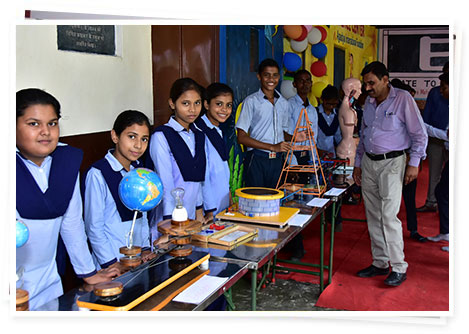
The project used a mobile science lab, science centre, and Lab on Bike to offer 11000 students with science education.
14466 10th standard public Army Schools and government students received career guidance.
Project Shiksha was planned to enable learners to think outside the box. It is meant to help the students look into their future and see beyond the obvious. On the other hand, offering appropriate infrastructure helps eliminate the common challenges of stunted children’s growth, increased dropout rates, and meagre confidence levels among children. Proper infrastructure by Project Shiksha also helps alleviate below-average academic performance in rural government schools.
The prime goal of this project is to establish an inspiring, encouraging, and enabling educational environment at government schools. The project aims to create an adequate infrastructure that will make learning an enjoyable adventure for all learners. Hero MotoCorp Limited considers important elements such as renovating classrooms, playgrounds, and all the necessary school furniture. The projects also seek to provide the students with school bags, books, and any other stationery. The deep-rooted issues within the Indian education system will also be dealt with by the project. This can be done by increasing enrollment in schools and encouraging higher attendance among the students. That said, the project desires to incorporate all classes of learners ensuring that not even the weak students are left out. The company developed a team of professionals to look at that.
The main beneficiaries of this project are based in Delhi (where the Head Office is) and in six manufacturing units spread across Rajasthan, Gujarat, Uttarakhand, and Haryana. The beneficiaries were selected depending on the need for assessment. The CSR team and the NGO partners conducted a series of visits to identify this targeted population. The project aims to cover everyone staring from the students to the women in the villages.
The major highlights of Project Shiksha by Hero MotoCorp Limited include benefitting 11000 and more students, 8 labs on Bikes, 68 schools, 4 mobile science labs, and developing one science centre. To ensure successful implementation of the project, the company developed teams of well-versed professionals to constantly engage with various schools providing career guidance and motivational workshops and seminars in the process. The project also adopts digital tools that help teachers in simplifying the most difficult lessons.
Since Hero MotoCorp is one of the largest two-wheeler companies, it had to develop mechanisms to ensure that every stakeholder was engaged. To get this done, the company acknowledges the need for stakeholder engagement.
Just like many other projects, Project Shiksha too had its roadblocks. Very old schools and buildings that were in dilapidated conditions are just some of the challenges this project encountered in its implementation. There were difficulties in developing the infrastructure as the schools were in devastating and gloomy conditions. Besides, unwanted requests from the principals and teachers of the various schools made the renovation an uphill task. It also took a lot of time and effort to explain and convince the general public of how beneficial this project was. The initial resistance of the project by the members of the public was too much to bear.
This elusive project by Hero MotoCorp adopts an innovative approach and is open to invitations from numerous geographical locations that seek their implementation. The project, which had a third-party impact evaluation shows in its implementation and outcomes that awareness programs need to be conducted among crucial stakeholders before the actual implementation.
If the story resonates with you, please share
Impact-Story is a series on development and CSR interventions leading to some impacts on the ground. If you have a project, innovation or intervention that has changed the lives of a few people or a community, please share a brief note at shilpi@csrbox.org. Our Team will get back to you after validating the information for a detailed coverage.

More Stories

CSRBOX is India’s leading CSR knowledge and impact intelligence driven media platform for the development community. It serves as an enabler, encouraging collaboration and partnerships between CSR stakeholders. Here, we connect and inform over three million professionals through our online platform, and bridge information gaps by providing a range of services for Corporate, NGOs and Social enterprises, to enhance their capacities, aid collaboration, plan projects, publish knowledge resources, conduct research, amplify their reach and much more.
Submit CSR News
Please submit your CSR news, CSR impact story ideas to us. Our Team will get back to you within 6-12 working hours. You can also email us at info@csrbox.org© Renalysis Consultants Pvt Ltd. All Rights Reserved | Powered by NGOBOX