Promoting traditional weaves of North-East to make it a sustainable source of income for rural women

June 5, 2018
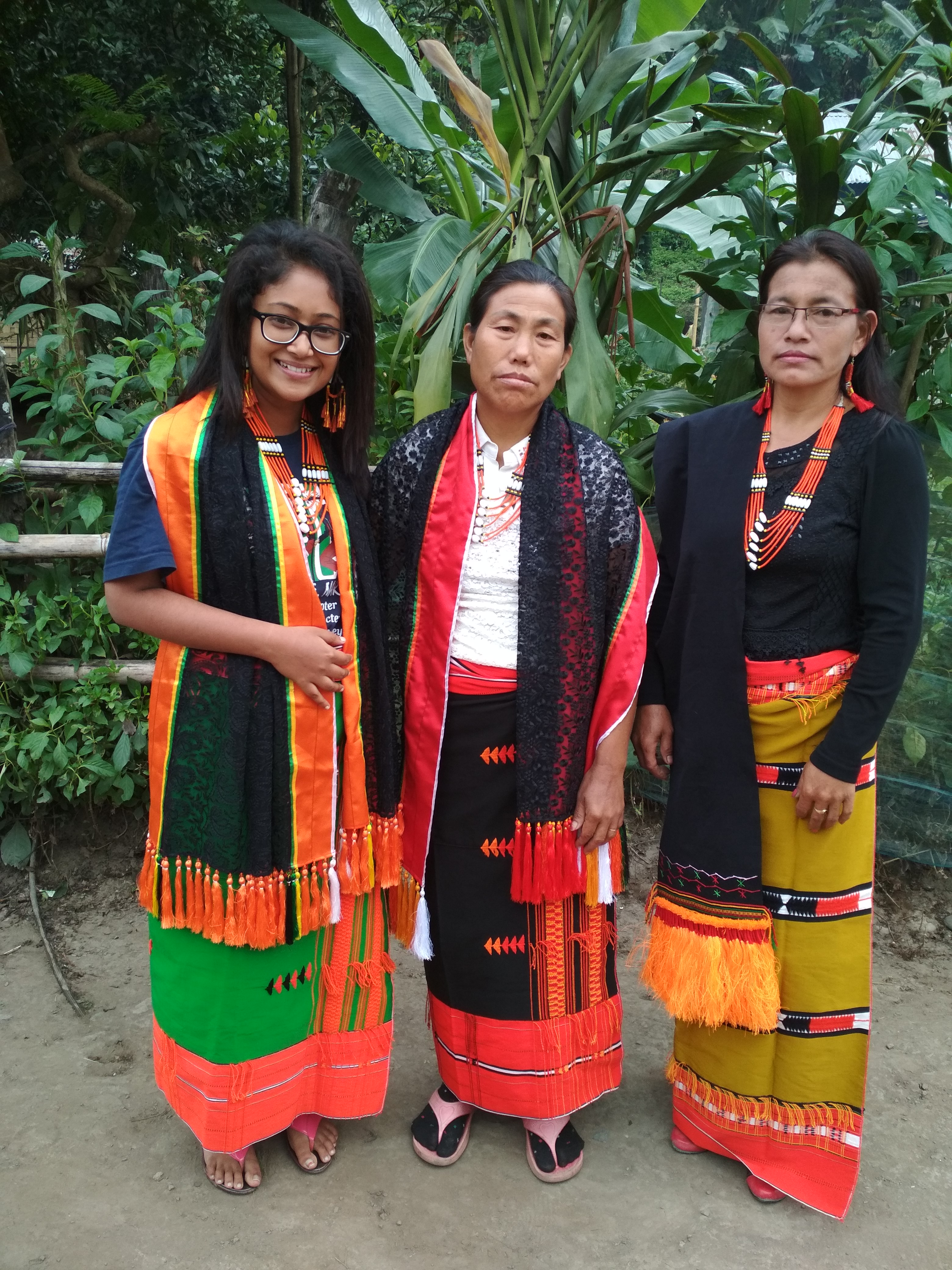
Naireeta with her beneficiaries
Discontented by her regular 9 to 5 desk job in Bangalore, Naireeta Biswas joined the SBI Youth for India Fellowship to be part of something “meaningful” and work for a manifold impact. She had no idea of how her perspective and understanding of rural India would be undergoing a paradigm shift. However, the only thing she knew was that she wanted to bring about a positive change in someone else’s life.
After getting selected for the 13-month rural development fellowship program, Naireeta was allotted YFI’s partner NGO, Barefoot College. As part of her project, she decided to stay in the two districts of Noney and Tamenglong in the north-eastern state of Manipur, where the NGO has been working, to understand the demographics and social fabric of the area. As a fellow, she started with studying the rural scenario and based on her interactions with the community,she found that women in the villages were determined but lacked the skill and platform to do something substantial with their lives.
Naireeta realised that Manipur had a rich traditional art of weaving fabrics and using handlooms to make cloth-based products. This is when she decided that she would work on a project which empowers women of these two districts by making them micro-entrepreneurs in their own village – a way to help them earn that extra bit of income without disrupting their daily chores. The initiative will also aid in the promotion of traditional arts and crafts of the state.
Elaborating about her idea, Naireeta said, “I wanted to design and implement a project where I have to build upon my ideas. Not coming from the fashion of merchandise industry, it was a challenge for me to work with fabrics and designs, but I did a thorough market research and took help of different organizations to train the community members”.
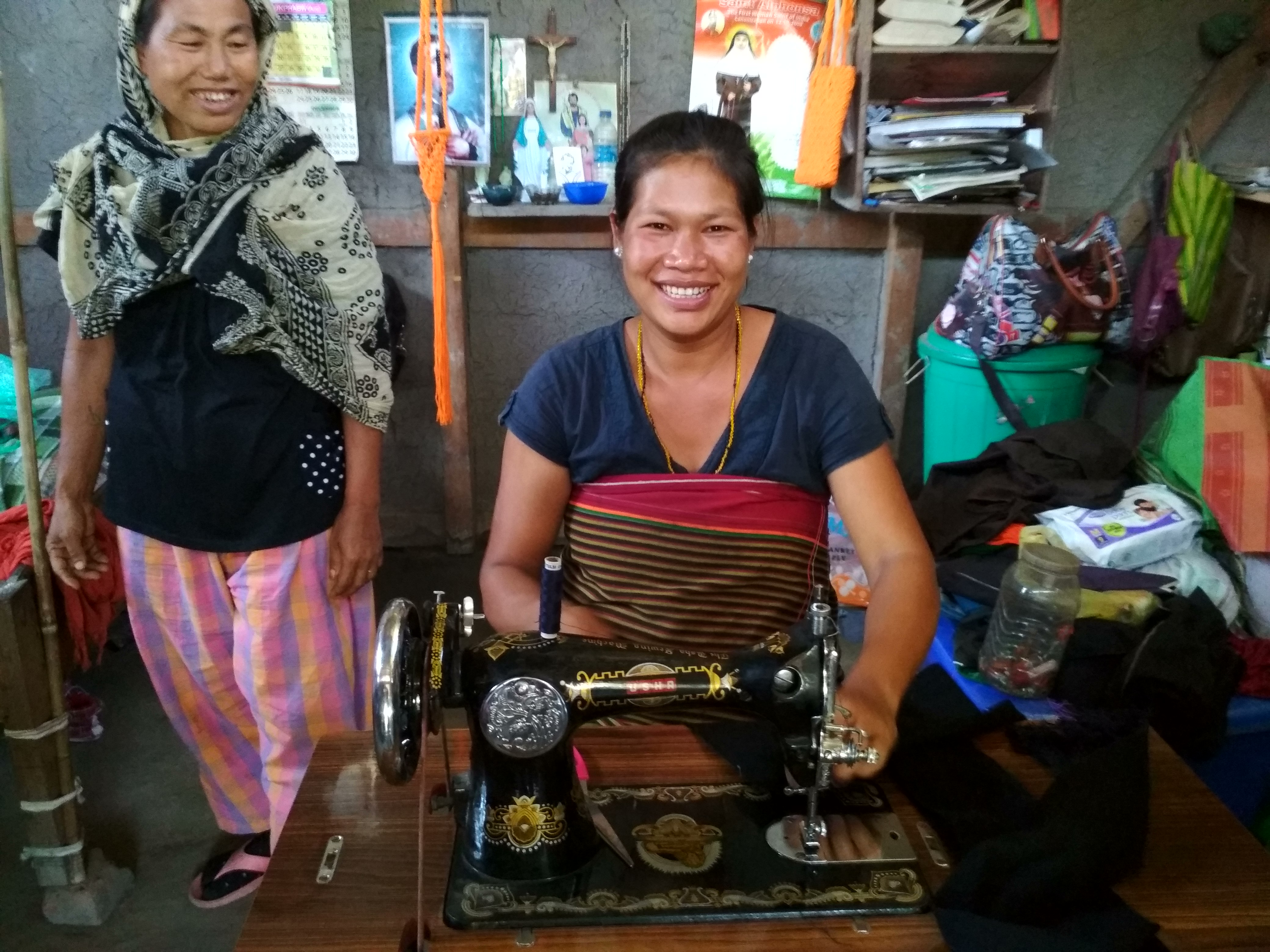
Advantage of this project is the women can continue working from home amidst their daily chores and looking after children
On the basis of the interest shown by women of the community during Naireeta’s interaction with the villagers, she shortlisted 8 women from the two districts in Manipur and facilitated ways to make sure they receive intensive 3 months of training by master trainers where they are taught about the nuances of stitching and tailoring. The product variety range from bags, sarees, mufflers etc. The training was held in Chumukedima, Dimapur (Nagaland).
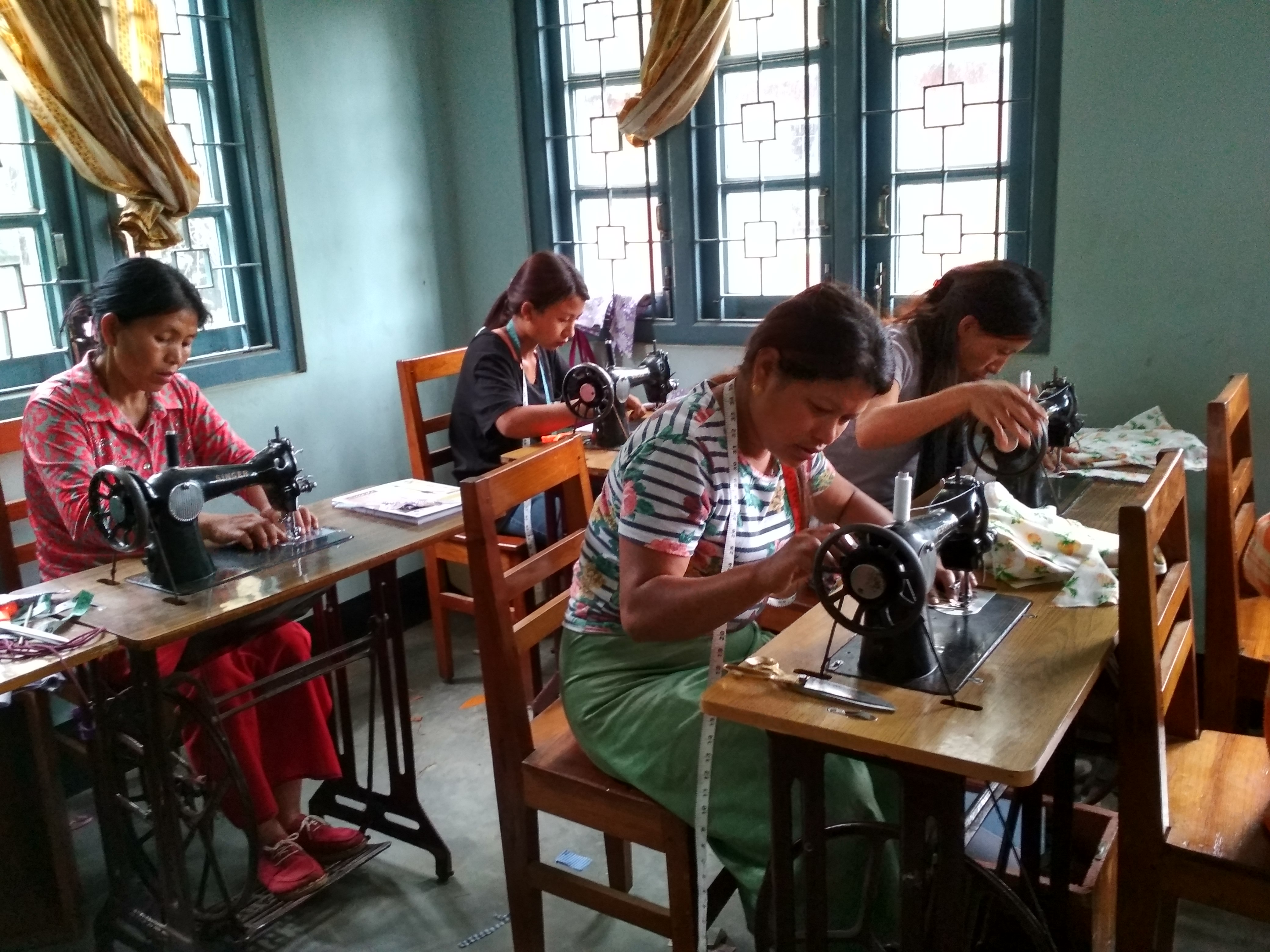
Beneficiaries participating in the training session in Nagaland
Naireeta realised that training alone won’t have a long term impact and she needed to ensure that the women are taught about market demand and market linkages. Hence, she incorporated the component of teaching the women how to stitch school uniform -shirts and skirts in particular as it would ensure a regular demand within their own community as well as outside. Moreover, she herself visited exhibitions of handloom products in cities like Mumbai to understand the market for such products to ensure her beneficiaries have access to market intelligence. Naireeta is also meeting up several NGOs based in the north-east as well as outside north-east to exhibit the samples of product made by her beneficiaries to see how her project can align with the NGOs who can help them sell their products. “Establishing market linkages is certainly a challenge for these women in the two districts of Manipur and I realized to ensure my project will leave a sustainable and effective impact on their life only if I am able to provide them with access to long term partners who buy the products from them and value their products. The main motto to meet these people is to understand the market better, take review about our products, understand costing and marketing strategies, design tastes in the market, and networking”.
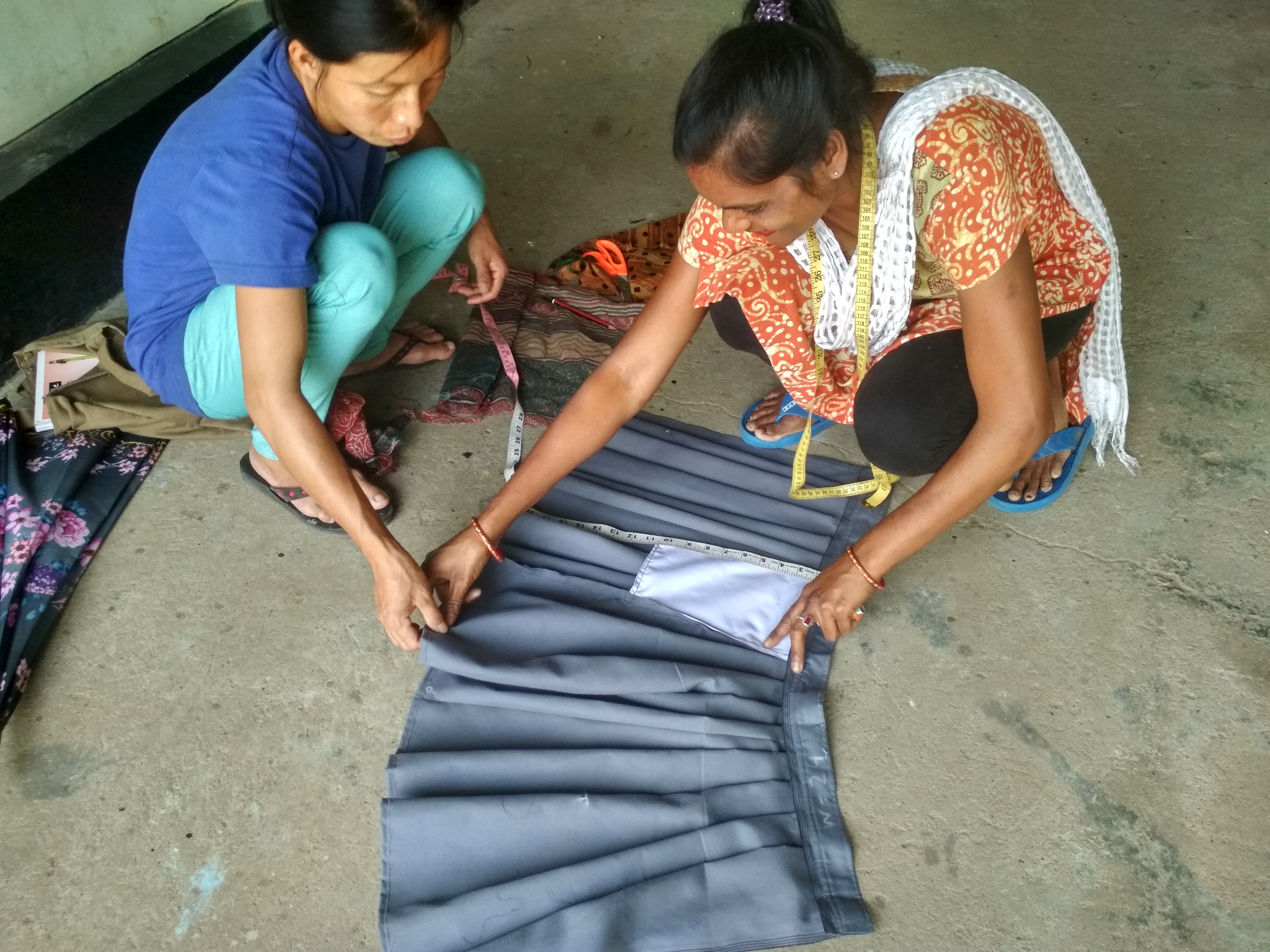
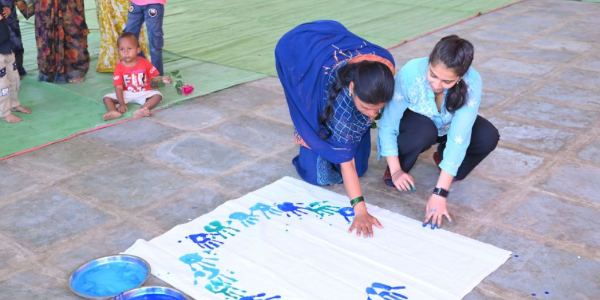
A beneficiary learning to make school uniform
Currently Naireeta is also focussing on facilitating a visit by a designer from NIFT Jodhpur who has agreed to come over to Dimapur to help the trainees with weaving techniques as well as she realized women traditional products have a huge market which is untapped to its potential yet.
In terms of impact the women have already managed to sell a considerable amount of their products which has provided a lot of enthusiasm and hope.
“These women were eager to be part of something like this, so I just had to find the right dots to channelize their enthusiasm and talent” says Naireeta.
Naireeta mentions that this fellowship has given her a new perspective of understanding the potential of rural India and she feels “given the right resources and hand-holding” women like her beneficiaries, will excel in livelihood initiates like these. She concluded by adding, “The youth from urban backgrounds should experience on the ground situations as it will help them gather insights that will them long-term.”
Do you want to be part of the fellow bandwagon and contribute to the development of rural India?
Apply online here to make this year, your #YearForChange.
Applications close on 5th of June.
Impact-Story is a series on development and CSR interventions leading to some impacts on the ground. If you have a project, innovation or intervention that has changed the lives of a few people or a community, please share a brief note at csr@ngobox.org. Our Team will get back to you after validating the information for a detailed coverage.


More Stories

CSRBOX is India’s leading CSR knowledge and impact intelligence driven media platform for the development community. It serves as an enabler, encouraging collaboration and partnerships between CSR stakeholders. Here, we connect and inform over three million professionals through our online platform, and bridge information gaps by providing a range of services for Corporate, NGOs and Social enterprises, to enhance their capacities, aid collaboration, plan projects, publish knowledge resources, conduct research, amplify their reach and much more.
Submit CSR News
Please submit your CSR news, CSR impact story ideas to us. Our Team will get back to you within 6-12 working hours. You can also email us at info@csrbox.org© Renalysis Consultants Pvt Ltd. All Rights Reserved | Powered by NGOBOX