
Breaking Silence on Menstrual Hygiene Management
Menstrual health is related effectively to the SDGs, including SDG 1 (no poverty), SDG 3 (good health and well-being), SDG 4 (quality education), SDG 5 (gender equality), and SDG 6 (clean water and sanitation). India is a signatory to the SDG goals and is working towards reaching the target in 2030. In this context work of organizations working on menstrual health is critical.
Citizens Association for Child Rights, which is a development partner of UNICEF firmly believe Menstrual Hygiene Management Enables Women and Girls to reach their full potential. Given the multiple challenges women and adolescent girls face, it is evident that promoting menstrual hygiene management (MHM) is not only a sanitation matter; it is also an important step toward safeguarding the dignity, health, and overall life opportunities of women and girls.
Adolescent girls are often unaware and unprepared for the onset of menstruation (menarche) – mostly due to a culture of silence surrounding women’s reproductive health issues of which menstruation is a part. This lack of preparation, knowledge and poor hygienic practices during menstruation causes a negative impact on girls’ self-esteem and personal development. It also affects their education – they often miss school because of shame or lack of adequate facilities to manage their menstrual period. In addition to schools lacking proper hygiene facilities, teachers are often not prepared to respond to girls’ inquiries about menstruation.
When I got my first period I was so scared and ashamed. I did not know what to do; I thought I have contracted some type of disease. “Mitali, Age 14 studying in Bharat Nagar MCGM School describes her experience during our Menstrual Hygiene Management Session in 2019.
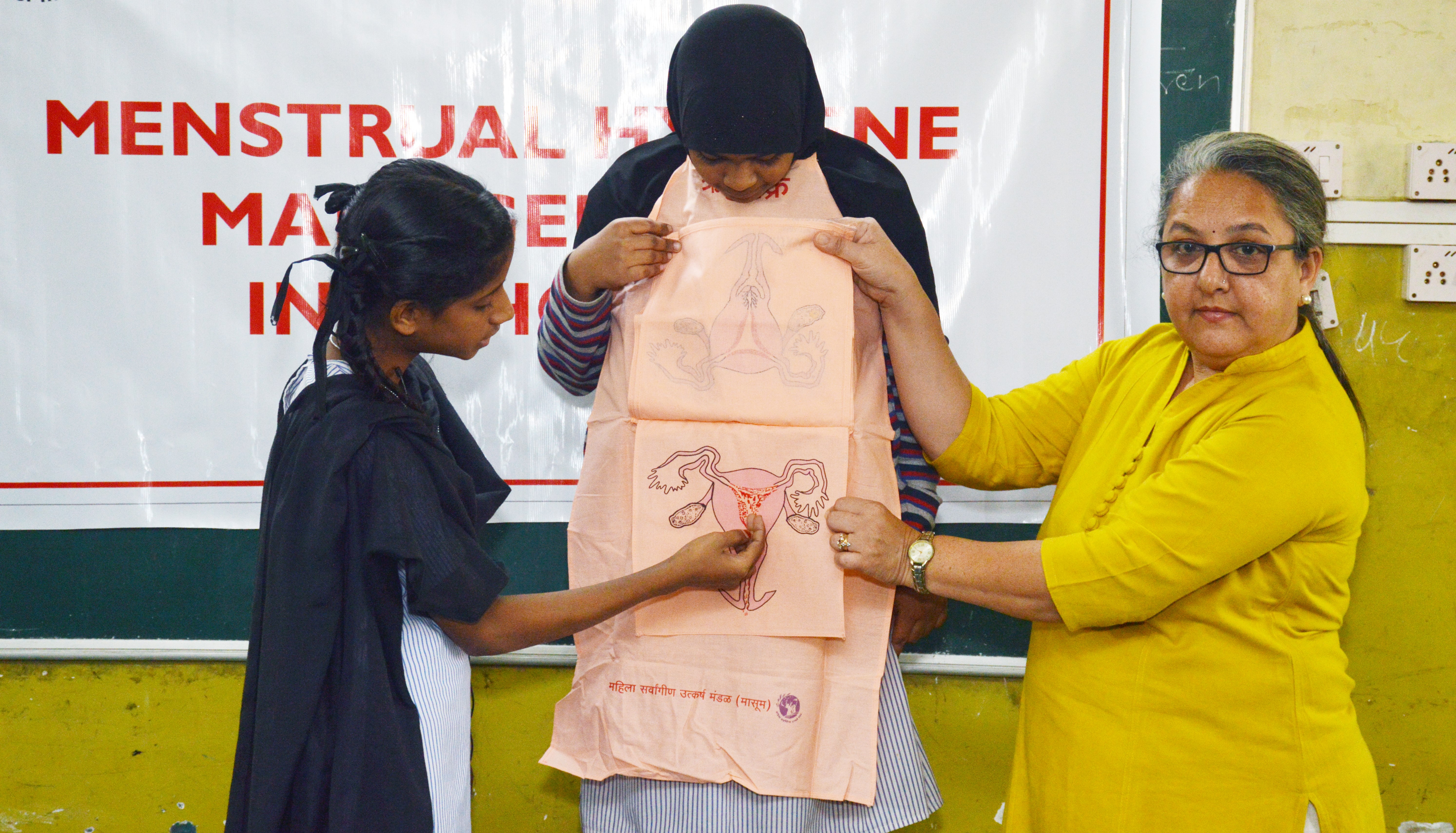
During another session, Nishta, aged 13 from Chakala MCGM School expressed “Didi, at my house, we have to sleep and eat separately during those 5-7 days. I am not allowed to enter the kitchen if I am hungry.”
The Baseline-End line Survey conducted by the organization states that over 65% of the girls believed that Menstrual Blood is dirty pre-intervention in comparison to 0% post-intervention.
CACR has reached out to over 23000 adolescent girls across Maharashtra and implemented a Social Behavioral Change Communication Program (SBCC) on Menstrual Hygiene Management (MHM) started under Swachh Bharat Mission (SBM) which is aimed at providing basic knowledge about menstruation and hygienic practices to adolescent girls and women. The program is designed with support and guidelines from UNICEF.
Through their SBCC program, they ensure to impart correct and essential information on menstrual hygiene management and convert the information to knowledge leading to the formation of lifelong habits.
The road map of the program is designed in such a way that the girls are able to :
- Believe that menstruation is normal and natural process by understanding the physiology of Menstruation.
- Reducing absenteeism, identifying and overcoming challenges;
- Differentiate between myths and facts;
- And become a Menstrual Hygiene advocate to fellow friends.
The Qualitative Outcomes have also been documented. They are as follows:
- 100% of girls understood the science behind menstruation as compared to 45% pre-intervention
- 85% of girls reported improved hygiene practices like wearing clean undergarments and changing pads periodically post-intervention.
- Absenteeism due to Menstruation was reduced to 10% post-intervention.
- 76% of the girls gained the confidence to discuss Menstruation with their male family members and don’t feel the need to hide from them.
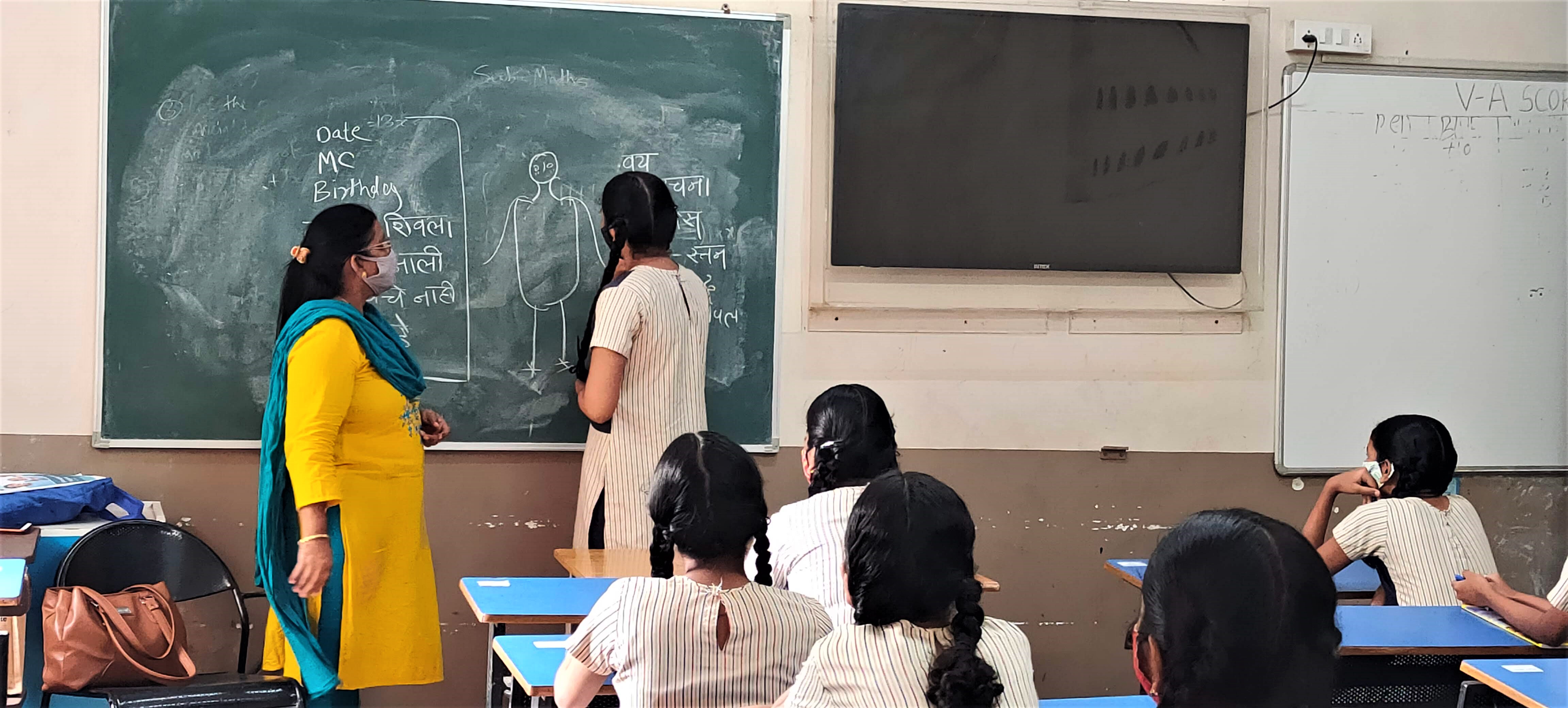
Young girls who underwent training expressed the need to shed the burden of illogical traditions and pre-conceived notions related to menstruation.
Progress in WASH, including in MHM, needs to be monitored if we want to achieve the Sustainable Development Goal of ensuring adequate water and sanitation for all as well as Gender Equality
Nitin Wadhwani – Director, CACR, stated that “Citizens Association for Child Rights is committed to reach out to every single adolescent girl and empower them with the knowledge on Menstrual Hygiene Management because Knowledge and Health is Wealth.”

CSRBOX
CSRBOX.org is Asia’s largest CSR platform with an in-depth CSR portfolio of over 1050 companies and 10000+ CSR projects. The platform works as a bridge between the development sector, and business community, government agencies and academic institutes to bring together opportunities on one platform and create a knowledge base for thematic interventions. A few of our clients are UNICEF India, IBM, BOSCH Ltd, HCL Foundation, Genpact, Diageo, Bajaj Foundation etc.We have projects, platforms and partnerships (3Ps) based approach for social impact in India
IMPACT TALKS

|

|

|

|

|

|


