Last Updated: 16/10/2019
Proposed Project Title
Overview of the Proposed Project
Key Project Partners
Project Status
Facts

Proposed Project Description
The project envisions all children in our communities have access to quality education and grow up to realise their full potential. With this objective, United Way Mumbai proposes an integrated project for education enhancement in a municipal school / zilla parishad school.
The project would have the following key interventions:
I. Infrastructure Upgradation
As part of this component, we propose two kinds of infrastructure upgradation. Specific requirements in each of these would be finalized once the school is determined.
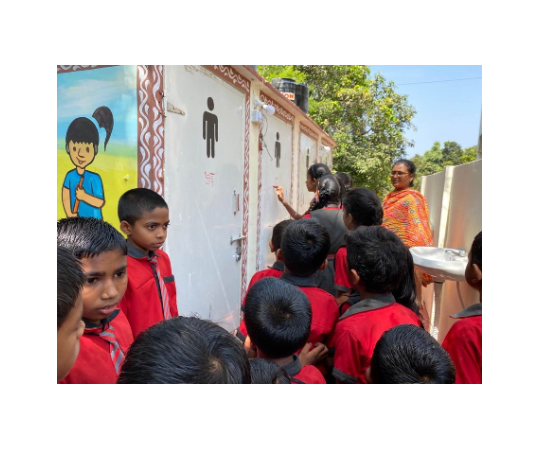
a. Upgrades for safety and hygiene such as refurbishment of school wall/gate, improvements in ventilation and lighting, refurbishment of sanitation facilities or provision of safe drinking water
b. Upgrades for play and recreation such as cleaning and de-weeding of school ground, plantation of trees, installation of play equipment, etc.
II. Early Learning
This component would focus on ensuring school readiness of children between 3-5 years of age through
- Physical well being
- Social and emotional health
- Independent learning habits
- Language development
- Cognitive processes like attention, memory, problem solving, creative thinking etc.
- General knowledge regarding the environment surrounding the child
- Pre-academic skills for learning of literacy and numeracy
This will be done through equipping the Balwadi with necessary educational material, training and building capacity of the teacher and improved learning practices.
III. Remedial Education
In order to improve learning outcomes and equip children with a stronger educational foundation, we propose initiation of remedial learning classes for children from Stds. I to 4. Children who are more than one grade below grade level would be recommended for the remedial learning class. An additional teacher would be required to work with children in small groups and run them through a structured remedial curriculum. The assessment would be repeated in five months at the end of the first term and children who have reached grade level would be integrated back into the classroom.
IV. Reading Programme
Children who struggle to read tend to fall behind academically. The ability to read and comprehend material allows them to self-learn and explore new topics. In addition, reading contributes greatly to a child’s imagination. Being exposed to different cultures and ideas, a well-read child tends to have a broader world view. Natural readers also tend to be more confident and better communicators.
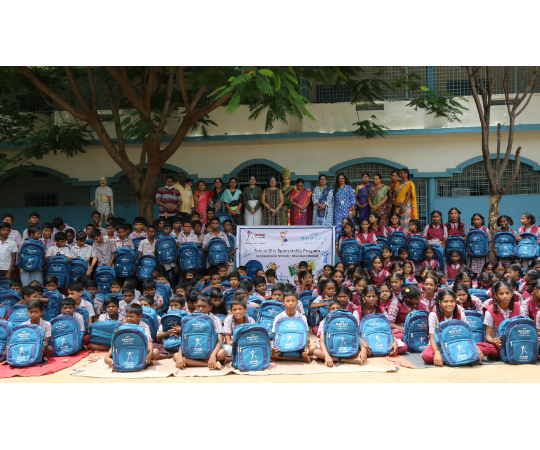
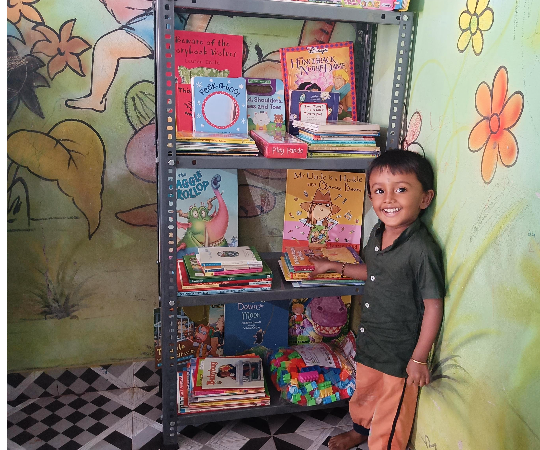
We propose a reading programme that encourages children to foster a love for books and reading for pleasure. Through this programme, we will set up a mini library in each class from Std. 1 to 10. Each library comprises of 130 books which are curated keeping in mind the reading abilities and language preferences of the children. In addition, each child will be gifted a set of 5 books each. For many children, these will be the first set of books they own. Reading journals will be distributed and children will be shown how to record their wish list of books and reviews of books they have read. We will also conduct a series of book reading sessions by children’s book authors and other professionals. Teachers of each class will also be trained in assisted reading techniques.
V. STEM
Science has always been a complex subject for school children. The teaching of these subjects is unfortunately text book centered. Science education, in many schools, develops competence but does not encourage inventiveness and creativity.
As part of our STEM interventions, we propose to set up a Mini Science Centre in the school. This MSC will be equipped with a range of 65 table top working models with 30 back-drops mapped to 120 concepts of Mathematics and Science for Class 5 through 10. Teachers will be trained in the use of this material. This will allow them to introduce abstract concepts to the children through concrete examples and materials.
For children in Stds. 1 to 5, STEM will be supported through a digital learning platform. This platform is equipped with audio visual lessons on concepts included in their curriculum along with worksheets and exercises. The digital learning platform promises to bring STEM learning alive and make it engaging for students. The modules can be used to introduce different concepts as well as for revision and assimilation.
All teachers in the school connected with STEM will be trained in pedagogy and project based learning methods. We also propose to organize an exposure visit for each class to a place of STEM interest (such as the planetarium, science centre, etc). A STEM newspaper will also be prepared on a monthly basis with contributions from the students themselves. This will include interesting experiments, quizzes, fun facts and other pieces to engage students.
VI. Career Counselling
Through this component, we endeavor to support young persons from marginalized communities in setting goals and charting a career path for themselves. Through a structured curriculum, the programme would assist the students in developing a sense of self, a greater understanding of their own abilities and motivations and an awareness of the education and career opportunities available to them. A Career Assessment Battery would be administered consisting of an Intelligence Scale, an Interest Inventory and a Differential Ability Inventory. A detailed report would be prepared for each child and include recommendations based on findings of the assessments and clinical interviews with the child and her teachers/caregivers.
In order to encourage exploration and self-discovery, we are also proposing that a Career Fair be organized by the children.
VII. Parent Engagement
The project will conduct sensitization workshops with parents on issues affecting children’s learning and development. These may include issues faced by girl students, a conducive home environment, low cost nutrition, bullying or abuse, importance of attendance, career opportunities, etc. Parents will be supported in discussing these issues and identifying solutions which can be implemented at the school and community level. In addition, community outreach would be done to initiate a change in attitudes and practices towards children’s education. This would be done through home visits and home based interventions, creative methods such as street plays, poster exhibitions and other mediums.
Salient Features
- Comprehensive education programme addressing educational needs from Pre-Primary to Standard X
- Implemented in partnership with municipal corporation / zilla parishad
- Creates visible difference in learning environment within 3 months of project, and lasting impact over multiyear support
About United Way Mumbai
United Way Mumbai is a part of the 130+ year old United Way movement spanning 41 countries across the world. Our mission is to improve lives by mobilizing the caring power of communities to advance the common good.
We work closely with a network of 400+ NGOs and a large number of corporates for their CSR programmes, workplace giving campaigns and other events. This includes designing of CSR policy and strategies, due diligence of NGO partners, programme implementation, employee volunteering, impact assessments and financial and programmatic reporting.
Over the past 17 years, we have partnered with over 300 companies and over 1,00,000 individual donors investing close to INR 390 crore for community development projects. Our expertise lies in identifying, designing & implementing high impact projects in the areas of Education, Health, Income, Environment, Public Safety & Social Inclusion in both urban as well as rural communities across the country.


.png)