
Subscribe to our Weekly Newsletter
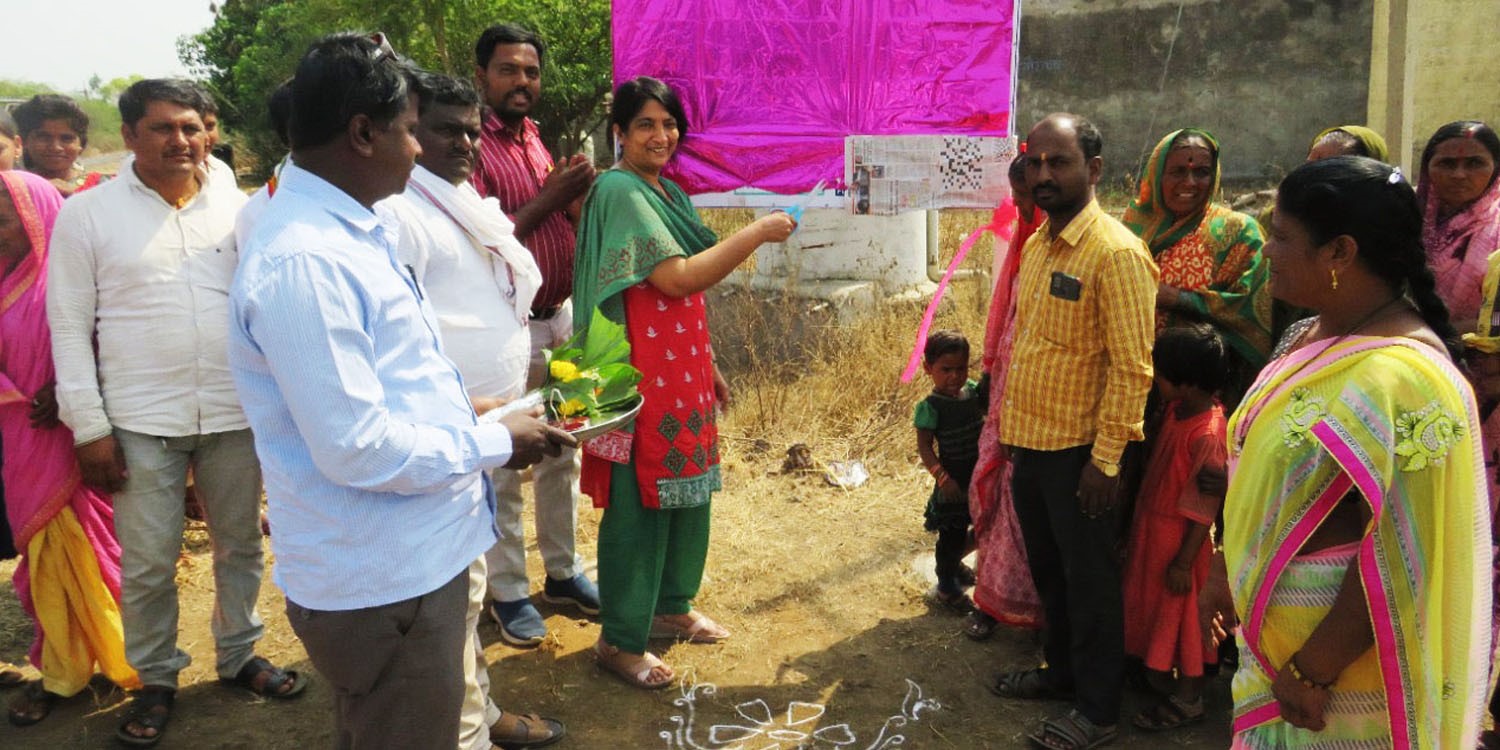
Hatkarwadi, Takalwadi and Bhanakwadi are water scarce villages in Beed district of Maharashtra. These villages practice rain-fed agriculture and mono-cropping. However, given the irregular rainfall in the last three years, several of these villages are faced with extreme poverty and malnutrition. Ninety-six percent of farmers here are small and marginal farmers unable to cope with the pressures of crop failure. Women in particular go through enormous difficulties. They are required to manage household work and contribute financially to the family as well as raise the children. Given the pressures due to failing agriculture, women from Beed often travel to places 400 km away to secure livelihoods. Quite often during peak summer period, most of these villages are deserted as everyone travels outside for work. Lack of sufficient water for drinking and farming is one of the key challenges faced by these villages.
When Cleantech Solar set up its 30 MWp plant at Beed in August 2021, it was keen to undertake some community development activities that would benefit the local communities. Based on Cleantech Solar’s detailed consultations with local communities, it decided to set up a rainwater-based stream rejuvenation program to improve the socioeconomic status of women and augment agricultural production in Beed. Cleantech Solar partnered with Dilasa – a Maharashtra-based non-profit, which had prior experience working in drought prone areas.
Community consultations with village members
Dilasa suggested the construction of ‘Dohas’, which are rainwater harvesting structures built on river beds, as a solution to Beed’s thirst for water, accompanied by livelihood development measures. A seven kilometer stretch of a local stream that ran through these villages was selected for deepening and construction of the ‘Doha’. The project interventions were designed on three major focus areas:
Further based on field surveys, the following supporting activities were undertaken to ensure long-term sustainability of the program:
After one year of program implementation (December 2021 to December 2022), the impact of the program is impressive. The CSR project collaboration has yielded several tangible positive results. An impact assessment of the program conducted by Dilasa revealed that financial and agricultural infrastructure support provided to the communities through the project was effective in improving access to water resources, promotion of livestock-based livelihoods and has helped the communities in achieving a better standard of living that is financially and environmentally sustainable. Some of the important benefits of the program are as follows:
A seven-kilometre-long stretch of the local stream was rejuvenated by the Dilasa team. This effort has helped immensely in storing rainwater and recharging groundwater, which is visible in the rise of water levels in the open wells. Drinking water sources have also been recharged to their optimum level and should be able to provide villagers with drinking water through the year.
Construction of ‘Doha’ – before and after
Water brims over in the Doha after monsoon
Beneficiary experience
Figure 6: Women receiving kitchen garden kits
The project has established two community information centres at Bhanakwadi and Hatkarwadi. The local communities can now access information related to government schemes and services and with other information-related public services due to internet connectivity and printers being available. Further, one of these centres promotes micro entrepreneurship activities to include beekeeping, goat-rearing and modern agricultural techniques to enhance agricultural productivity.
Villagers and members from the Dilasa Team at the Community Information Centre in Bhanakwadi
To promote livestock management, 100 female goats and 10 male goats have been provided to 50 women from the three villages who have been trained in goat farming.
Women receiving goats for goat farming
This year-long project has been successful in creating self-sustaining models of development that have been indigenously developed and address critical issues around water and livelihoods through women’s empowerment.
Thus, it is evident that empowering local communities and making them co-contributors in their own development process by providing opportunities, resources and skills is the best way forward to pull out farmers caught in the rural drought crisis.
Neighbouring villages are also demanding that the Dilasa model be extended to their villages. Cleantech Solar’s efforts have brought smiles on the villagers’ faces, and they can look forward to a water secure future.
About Cleantech Solar (www.cleantechsolar.com):
Cleantech Solar is a pan-Asia supplier of renewable energy to corporates, combining the capabilities of a global player with responsiveness and agility.
Headquartered in Singapore, Cleantech Solar has numerous solar power plants across India and Southeast Asia, covering over 750 MW across the various stages of operations and construction with many more solar and wind projects under development. This includes installations in India, Singapore, Cambodia, Indonesia, Malaysia, Thailand and Vietnam.
The company is backed by long-term strategic shareholders - Keppel Corporation, Keppel Asia Infrastructure Fund and Shell Eastern Petroleum.
The company helps corporations to meet their sustainability goals, offering them a unique combination of:

CSRBOX is India’s leading CSR knowledge and impact intelligence driven media platform for the development community. It serves as an enabler, encouraging collaboration and partnerships between CSR stakeholders. Here, we connect and inform over three million professionals through our online platform, and bridge information gaps by providing a range of services for Corporate, NGOs and Social enterprises, to enhance their capacities, aid collaboration, plan projects, publish knowledge resources, conduct research, amplify their reach and much more.
Submit CSR News
Please submit your CSR news, CSR impact story ideas to us. Our Team will get back to you within 6-12 working hours. You can also email us at info@csrbox.org© Renalysis Consultants Pvt Ltd. All Rights Reserved | Powered by NGOBOX


