Subscribe to our Weekly Newsletter
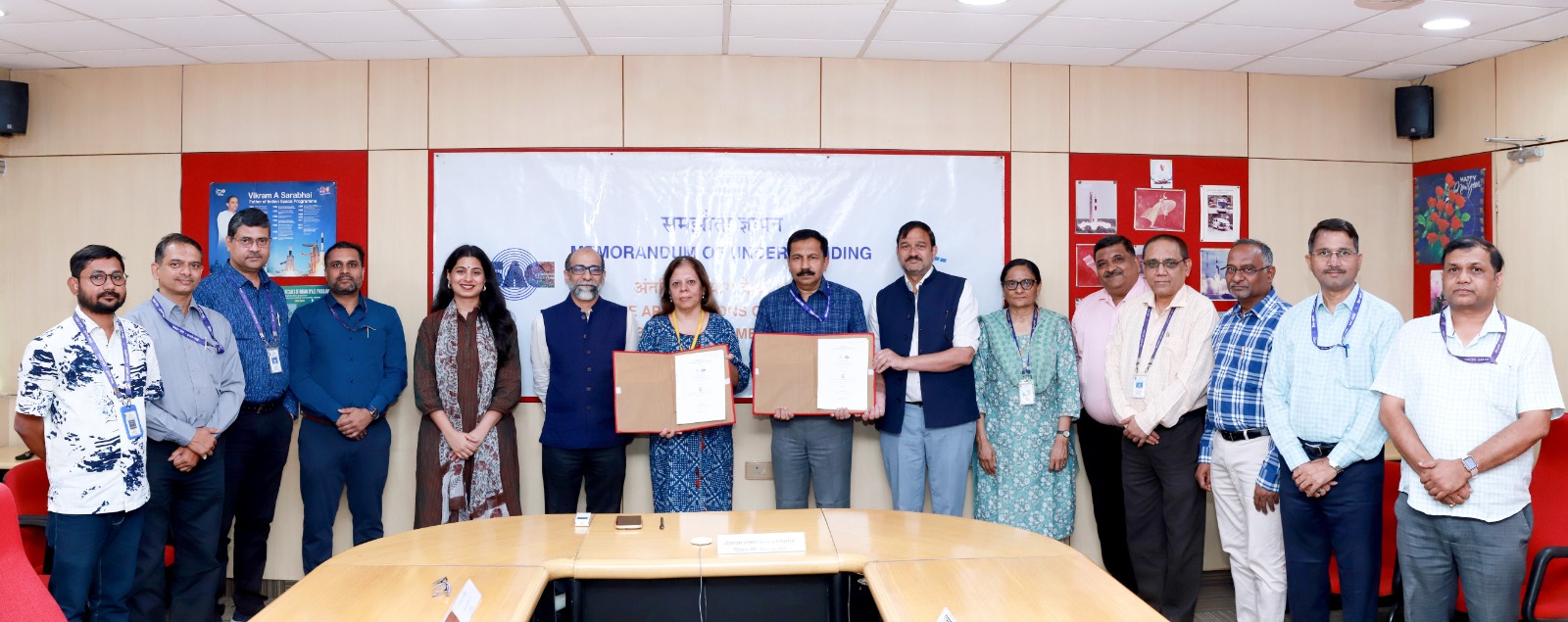
The Space Applications Centre (SAC) of the Indian Space Research Organisation (ISRO) and the Ashoka Trust for Research in Ecology and the Environment (ATREE) have signed a Memorandum of Understanding (MoU) to strengthen collaboration in research, data, and knowledge exchange for sustainable land management.
The partnership will focus on mapping India’s grasslands and other open natural ecosystems, assessing the impacts of restoration efforts on degraded lands, and developing improved methodologies for the estimating both above- and below- ground carbon. By combining SAC-ISRO's expertise in large-scale geospatial mapping with ATREE's interdisciplinary ecological research and field-based experience, the collaboration aims to generate robust policy-relevant data.
This joint effort seeks to support national and state-level decision-making on land use, climate action, conservation, and rural livelihoods. It will also contribute to the development of scalable and standardised approaches for identifying and monitoring ecosystems such as grasslands, savannas and deserts — landscapes that are ecologically significant but have often received limited attention in policy and planning.
The MoU brings together the complementary strengths of SAC-ISRO and ATREE, combining advances in space-based observation with ecological science and field-based insights. It marks an important step towards strengthening how we understand and monitor India’s diverse landscapes, particularly open natural ecosystems. This collaborative effort will contribute to more informed decision making, while continuing to evolve with inputs from a wider community of researchers, practitioners, and institutions.
The partnership is aligned with India’s commitment to achieving Land Degradation Neutrality by 2030 and contributing to progress across multiple Sustainable Development Goals.
By formalising this partnership, ISRO’s Space Application Centre and ATREE are marking a step towards better integrating ecological integrity with economic resilience, ensuring that India’s open landscapes are recognised as strategic natural assets for the country’s future.

CSRBOX is India’s leading CSR knowledge and impact intelligence driven media platform for the development community. It serves as an enabler, encouraging collaboration and partnerships between CSR stakeholders. Here, we connect and inform over three million professionals through our online platform, and bridge information gaps by providing a range of services for Corporate, NGOs and Social enterprises, to enhance their capacities, aid collaboration, plan projects, publish knowledge resources, conduct research, amplify their reach and much more.
Submit CSR News
Please submit your CSR news, CSR impact story ideas to us. Our Team will get back to you within 6-12 working hours. You can also email us at info@csrbox.org© Renalysis Consultants Pvt Ltd. All Rights Reserved | Powered by NGOBOX