


Subscribe to our Weekly Newsletter
.jpeg)
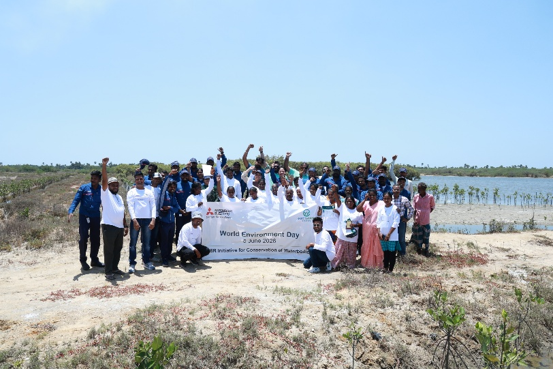
As World Environment Day 2026 draws global attention to the growing effects of climate change, multi-business conglomerate ITC is using AI to help decode nature’s urgent signals and enable timely, site-specific climate adaptation measures across its operations and agri catchments to build resilience and support a more sustainable future.
The theme for World Environment Day 2026 is “Inspired by Nature. For Climate. For Our Future”. This year, the clarion call is #NowForClimate, with a focus on the urgent signals the Earth is sending and the signals we choose to send back.
Across India, climate change is increasingly impacting human life. Rising temperatures, with some regions recording spikes of up to 50°C, extremes, increasing sea levels, shifting rainfall patterns, more frequent extreme weather events, and growing pressure on natural resources are creating a significant environmental impact. on businesses, agriculture and communities alike.
To address these challenges, ITC has used different purpose-specific AI tools for carrying out climate risk assessments at 140 sites as well as agri value chains. Based on the assessments, it has undertaken targeted site- specific interventions to climate-proof its physical infrastructure, build resilience in agriculture and support climate adaptation. This has helped the company integrate climate science, advanced technologies and data-driven insights into its sustainability strategy.
ITC’s climate risk assessment across 140 sites, including owned assets, key third-party manufacturing units and potential sites, provides projections and insights across 20+ climate metrics, including floods, extreme wind, drought and more, across different climate change scenarios and time horizons. Using insights from its climate risk assessments, ITC is developing site-specific adaptation plans for vulnerable infrastructure. These plans include engineering solutions, nature-based interventions, early warning systems and measures to improve community preparedness for extreme weather events.
The agricultural sector’s vulnerability to climate change is significant. Building climate resilience is equally essential for food security, rural livelihoods, supply chain stability and environmental sustainability. ITC has conducted multiple farm-level studies covering agri catchments leveraging AI based tools. These studies assess how climate change could affect crop yields across different regions of India. Based on these insights, ITC is working on developing hotspot specific plans, providing AI-enabled hyper-local, personalised crop advisories, engaging in research and promotion of climate resilient varieties of crops suitable for micro regions, leveraging the ITCMAARS phygital eco-system, partnership with agri based institutions and the R&D capabilities of its Life Sciences and Technology Centre.
This approach has enabled ITC to promote crop-specific regenerative farming practices like zero tillage, introduce climate-resilient varieties and improve soil health through the use of bio-fertilizers. It is also implementing nature-based solutions that strengthen water stewardship, conserve biodiversity and protect critical natural resources.
Through these efforts, ITC has expanded its Climate Smart Agriculture (CSA) programme to nearly 32 lakh acres across 17 states, benefiting more than 12 lakh farmers. The Company aims to scale the programme to 4 million acres by 2030.
Mr. S. Sivakumar, Group Head – Agri & IT Businesses and Sustainability, ITC Ltd. said, “The impact of climate change is being felt by communities, farmers and businesses every day. Extreme weather events, water stress, biodiversity loss and increasing pressure on natural resources are clear signals that urgent collective action is needed. By combining AI, climate science and collaborative partnerships, we can turn data into insights and insights into meaningful action.”
"As part of ITC's sustainability journey, we continue to strengthen our nature-based interventions. Going forward, we will significantly scale our multi-dimensional initiatives with a focus on nature-positive outcomes that help build a more sustainable future," he added.
To implement climate related and livelihood generation interventions at scale, ITC has taken a partnership-driven approach. The company works with more than 200 partners, including Central and State Governments, research institutions, implementation agencies, industry bodies, coalitions / collaboratives and local communities.
In addition to its adaptation programmes, ITC has been scaling several decarbonisation interventions with a focus on green infrastructure. The Group has 40 LEED platinum certified green properties including ITC Hotels. More than 50% of its total energy requirement is already met through renewable energy sources such as wind, solar and biomass, helping reduce its carbon footprint. ITC is targeting 100% renewable electricity by 2030.
ITC's sustainability strategy is guided by its credo of Responsible Competitiveness, which seeks to create enduring business value while simultaneously generating environmental and social capital. Under its Sustainability 2.0 agenda, the company is scaling up its interventions to support sustainable livelihoods, pursue newer ways to fight climate change, strengthen efforts towards ensuring water security for all and create an effective circular economy.ITC has committed to achieving ‘Net Zero Operations’ by 2050 through continued decarbonisation and emissions reduction across its operations (scope 1 & 2). ITC has also commenced working on strengthening systems to measure and monitor Scope 3 emissions in line with emerging global standards.


CSRBOX is India’s leading CSR knowledge and impact intelligence driven media platform for the development community. It serves as an enabler, encouraging collaboration and partnerships between CSR stakeholders. Here, we connect and inform over three million professionals through our online platform, and bridge information gaps by providing a range of services for Corporate, NGOs and Social enterprises, to enhance their capacities, aid collaboration, plan projects, publish knowledge resources, conduct research, amplify their reach and much more.
Submit CSR News
Please submit your CSR news, CSR impact story ideas to us. Our Team will get back to you within 6-12 working hours. You can also email us at info@csrbox.org© Renalysis Consultants Pvt Ltd. All Rights Reserved | Powered by NGOBOX


