Education through solar energy in rural Uttar Pradesh

August 31, 2018
Solar power solutions in rural India
We see big opportunities in small places is the vision of United for Hope (UfH). And the results promise to be big in efficacy as well. UfH, an NGO registered in India, Germany and the US believes in investing its time and funds in interventions which are sustainable and far-reaching.Through a holistic strategy called “Smart Village”, United for Hope is rebuilding the opportunities for rural populations in their villages, transforming rural India into a place of opportunity. With its focus fixed firmly on providing rural India with clean energy and education access through solar power connections, UfH has tied up with Shakti Empowerment Solutions (SES), its sister social enterprise to do just this, in some of the most remote parts of the country. SES was founded in 2016 in India to host the legal transactions for social enterprise for UfH.
“Through our Smart Village approach we believe in reaching all members of the communities we work with,” says Tara McCartney, Founder and Director of both the organizations. “We believe in designing and implementing wide ranging social development projects under the three overarching pillars of education, social enterprise and community support, in partnership with our supporter, the American Engineering Foundation, IEEE Smart Village (IEEE SV). Our aim is to promote sustainable, scalable and inclusive progress.”
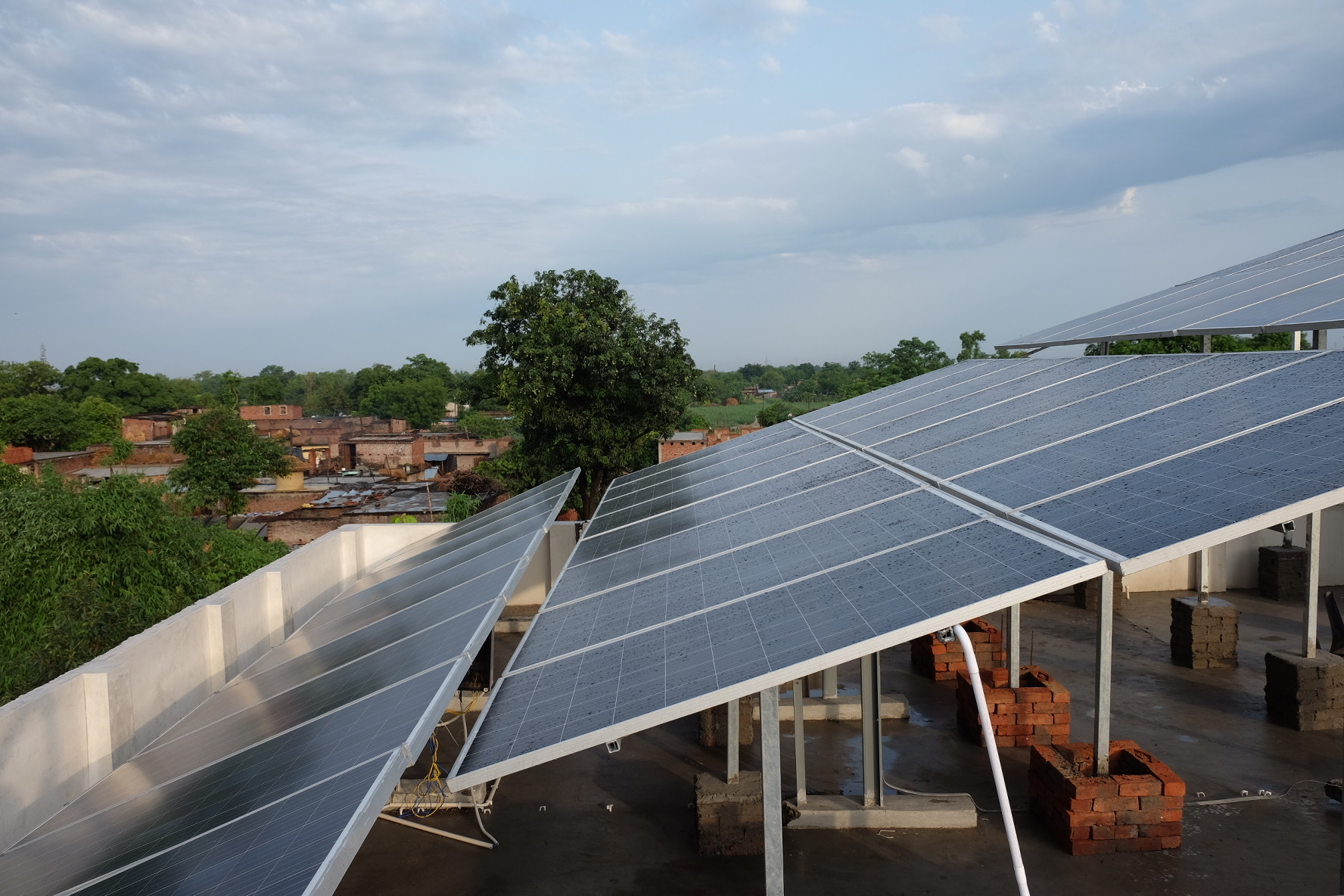
The pilot project is testimony to her words. With the financial support of IEEE SV, SES established the project in November 2017, in Tirmasahun, Kushinagar District, (Eastern Uttar Pradesh). A solar energy enterprise to provide infrastructural and program needs for education and affordable, clean energy for the community, the project has a seed funding of $202,377.86 and aims to reach out to 25,000 beneficiaries. It includes an onsite microgrid that comprises a hybrid system of a distribution model for portable solar battery kits combined with a cabled microgrid connection for customers within a 250m radius from the installation. The power generation capacity is 18.9kW per community installation.
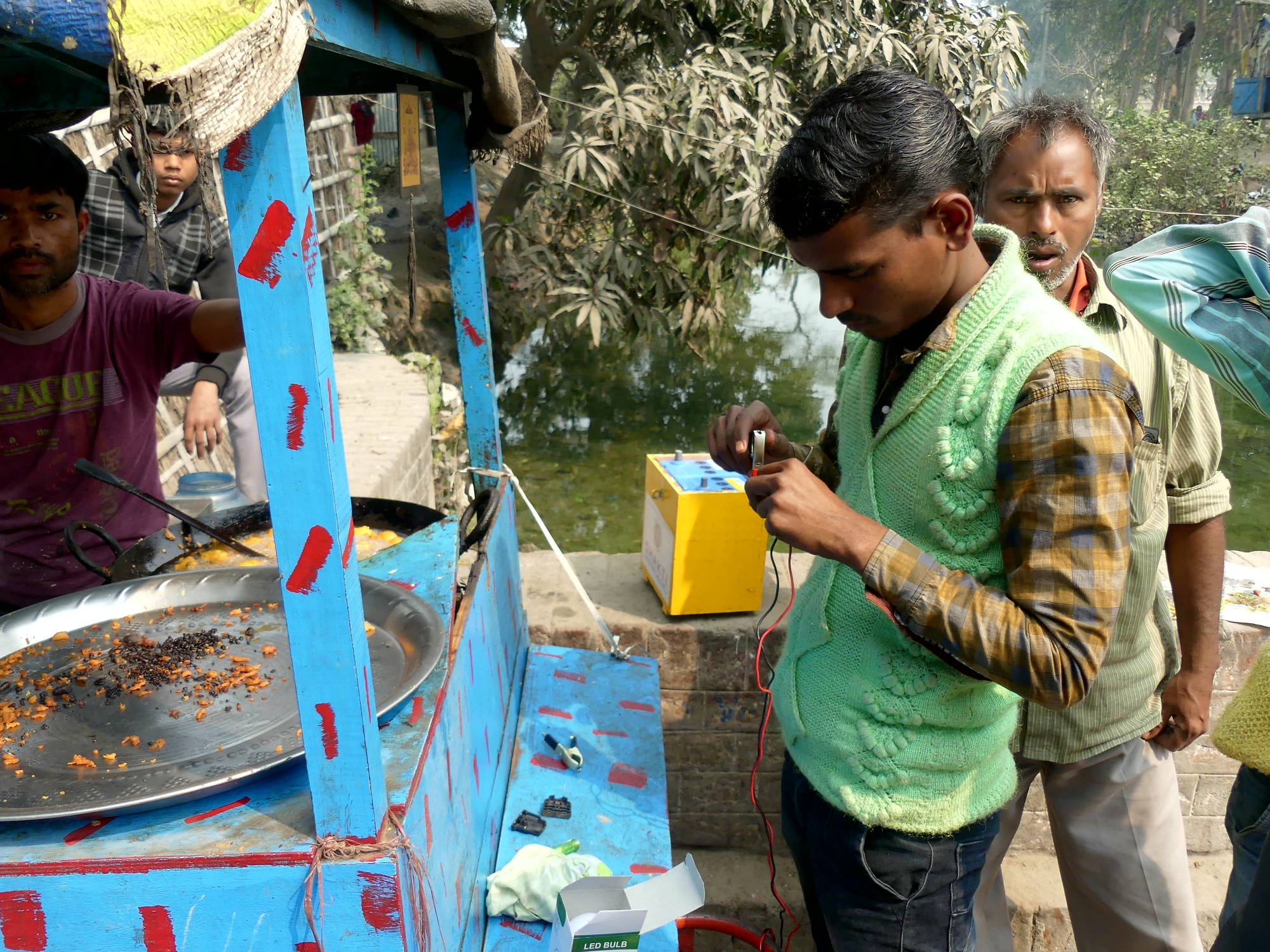
Says McCartney; “Our pilot project is located in one of India’s poorest regions. The combination of inadequate infrastructure, health and energy along with poor education, traps the rural populace in a vicious cycle of poverty. The national grid in the region is unreliable, being only intermittently available. Many villagers rely on kerosene lanterns that are expensive, dangerous and hazardous to their health.”
The solar energy enterprise in Tirmasahun provides electricity to households, small commercial beneficiaries and community resources such as a water purification plant as well as providing power needs for additional social enteprises around social tourism and menstrual hygiene products. The education programme provides access to quality classes in a community center powered with reliable electricity and fitted with WiFi and a computer lab. And the solar powered e-rickshaw provides transportation to other villages and transport hubs, expanding the ability of villagers to reach nearby areas for work, education and commercial needs. Says McCartney; “At the heart of a Smart Village is the community centre. Run on solar power, it serves as the focal point for classes, social enterprises, village meetings, health clinics, drop-in services, internet access, business operations and much more.”
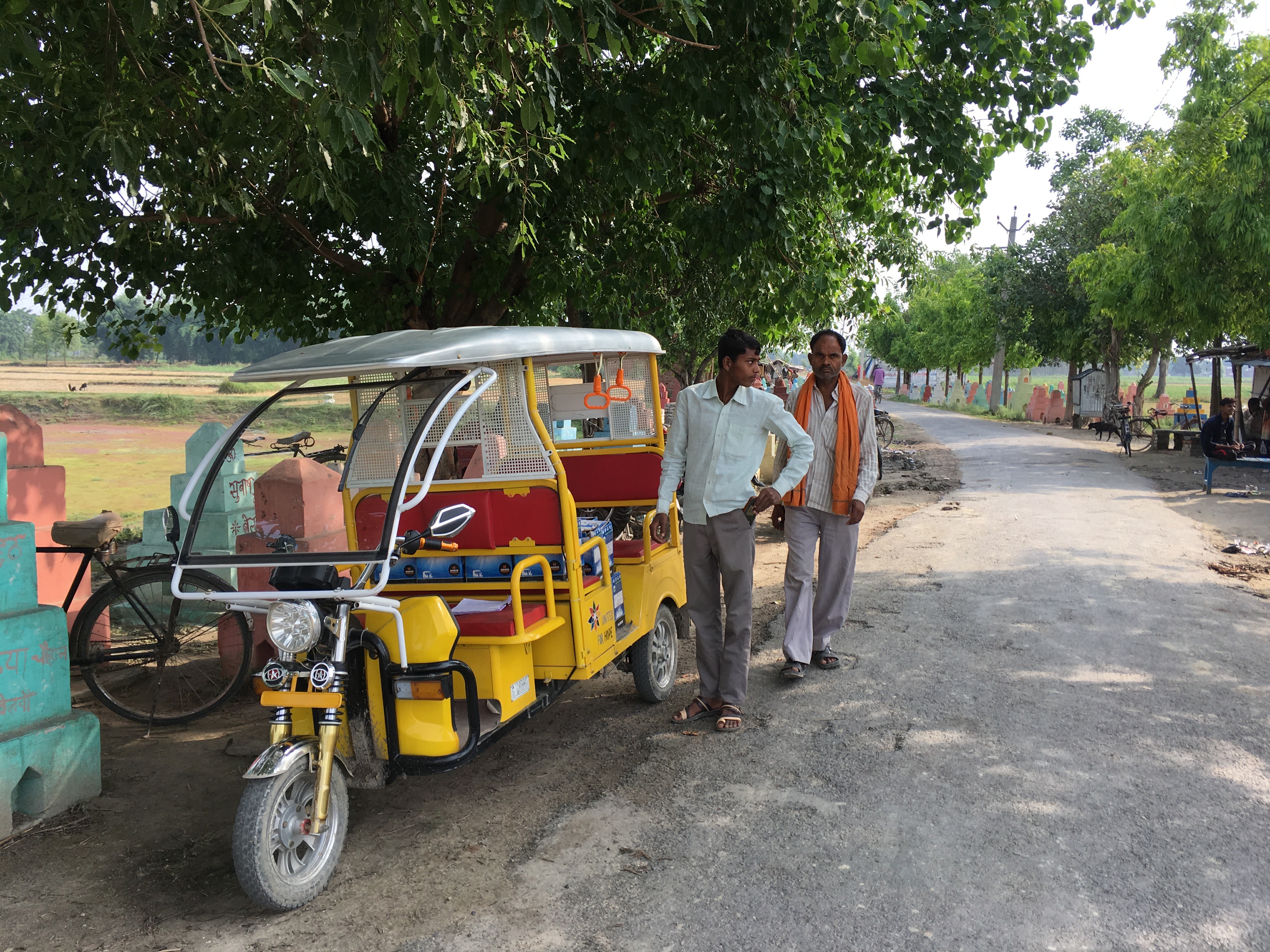
Solar Powered e-Rickshaw
SES has also started an interesting social tourism programme in Tirmasahun which promises a truly immersive experience into real village life. Visitors can enjoy typical Indian hospitality and unique experiences, from making and drinking tea with local women, to taking an ox cart ride through the hamlets. The initiative promises to benefit the local people. Rooms for overnight guests will be available from October. All profits are reinvested into the community. Since Tirmasahun is close to Kushinagar, a world-famous Buddhist pilgrimage town which attracts thousands of visitors from all over the world, this is an initiative which, if well publicized and received, could well create significant income-generation opportunities for the local community. A by-product of the tourism activity is the possibility to work with villagers on the creation of local items. UfH and SES aim to get the community to polish up their skills and to help them to sell their local products in the tourist market, initially at their community centre and beyond that, in the tourist shops of Kushinagar.
Says McCartney; “In line with the policy of our organization, our project works towards combining community education with entrepreneurial business opportunities. The education programme hugely enhances the learning of our students and helps in ensuring the transmission of knowledge and training for successful social enterprises. We work on education for children, women, adults and in community education as well.”
After the pilot phase distributes solar energy to approximately 150 families, SES will utilize the lessons learned and conduct a rollout of multiple operations across the entire district. Every phase of the solar project will be accompanied by educational and vocational training programmes carried out at its community centre. The final goal is to create new markets and self-sustaining, modern communities. The presented pilot programme will take one year, ending in late 2018. Once the pilot phase is complete, SES will use best practices and scale to ten locations in five years and transform 41 communities.
Says McCartney; “Our solar energy enterprise and our education projects implement the IEEE SV agenda in the marginalized districts of Northern India and create a blueprint for a scalable rollout. We are looking at reaching out to 70,000 beneficiaries across 40+ villages by 2027.”
If the story resonated with you, please share
Impact-Story is a series on development and CSR interventions leading to some impacts on the ground. If you have a project, innovation or intervention that has changed the lives of a few people or a community, please share a brief note at csr@ngobox.org. Our Team will get back to you after validating the information for a detailed coverage.


More Stories

CSRBOX is India’s leading CSR knowledge and impact intelligence driven media platform for the development community. It serves as an enabler, encouraging collaboration and partnerships between CSR stakeholders. Here, we connect and inform over three million professionals through our online platform, and bridge information gaps by providing a range of services for Corporate, NGOs and Social enterprises, to enhance their capacities, aid collaboration, plan projects, publish knowledge resources, conduct research, amplify their reach and much more.
Submit CSR News
Please submit your CSR news, CSR impact story ideas to us. Our Team will get back to you within 6-12 working hours. You can also email us at info@csrbox.org© Renalysis Consultants Pvt Ltd. All Rights Reserved | Powered by NGOBOX