Fighting Hunger to Keep Our Children Alive

August 13, 2018
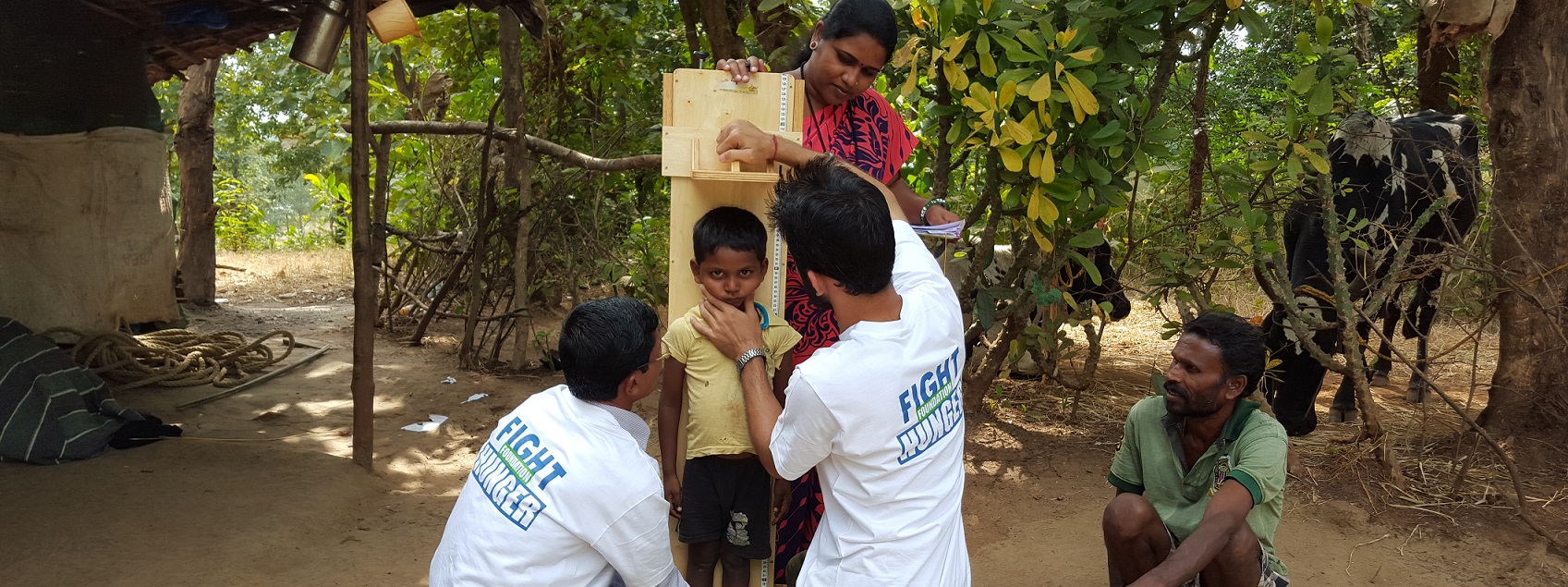
Detecting malnutrition in children
Despite rapid economic growth over the last decade, malnutrition still affects large portions of India’s population. One out of every fourth malnourished child in the world is found in India. A shocking 6 million children in India suffer from severe acute malnutrition. Around 1 million children die due to malnutrition related causes.
Thankfully, malnutrition is predictable, preventable and treatable.
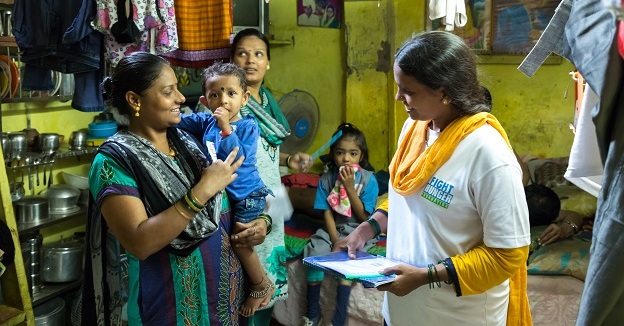
Since its inception in 2012, Fight Hunger Foundation (FHF) has been working tirelessly to help children combat malnutrition in India. They work with vulnerable communities, with mothers, children, government health workers, to tackle the causes and consequences of malnutrition. Working in mostly tribal areas, over the last 5 years FHF has impacted the lives of 700,000 people across 680 villages in the states of Maharashtra, Madhya Pradesh and Rajasthan.
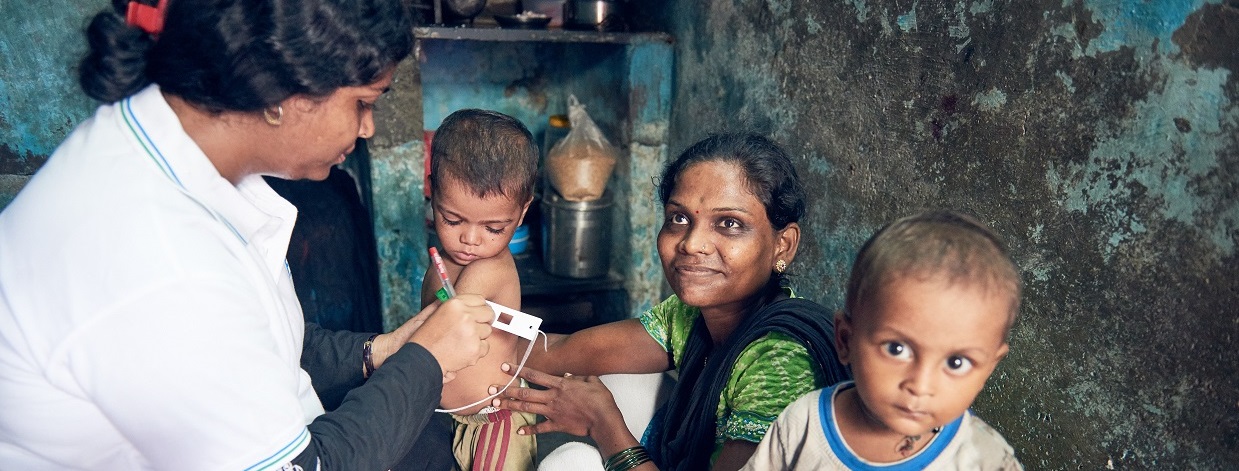
Identifying early signs for malnutrition
Creating Happy and Healthy Childhoods
In a tiny village in Baran, Rajasthan, Madhu lived with her happy family with two children, her husband and mother-in-law. All was going well for her until one day, she discovered that her husband had turned into an alcoholic and was wasting away the family income in drinking and spending time in bad company. In spite of a lot of counselling and cajoling, her husband refused to support the family and had turned into an addict.
Madhu was forced to take up manual labour in order to support her family. She often worked late, leaving her sons under the care of her mother-in-law. Madhu longed to be with her children but had to continue working hard for the family’s well-being.
A few weeks later, Madhu noticed that her older son, Sandeep, was starting to look weak, would not eat his meals, would cry through the day, and his eyes had lost the shine and clarity of a two year old. Madhu was worried about her son but sadly did not have the time or the knowledge about the reason for his discomfort. Not having any support at home, she could not take little Sandeep to the nearby hospital either.
During a house-to-house screening drive conducted by FHF in the village, a health worker spotted Sandeep and found him to be severely malnourished. FHF uses various tools for detecting malnutrition in children, be it measuring a baby’s weight, height, the ratio of her/his height for age, her/his Middle Upper Arm Circumference (MUAC) and other standards set by the World Health Organization (WHO) globally.
Children suffering from acute malnutrition carry 11 times the risk of death, compared to a normal healthy child. If left untreated, the child could develop stunted growth or his body would be wasted away, impeding his growth potential.
Sandeep had turned malnourished due to lack of care, lack of balanced food, contaminated water and unhygienic conditions around the house. The FHF team advised Madhu to rush her son to the nearest Malnutrition Treatment Centre (MTC) in Baran, where he would get the most appropriate in-patient treatment for acute malnutrition.
Sandeep was given necessary medications and was fed nutritious and therapeutic food 5 to 6 times a day. Since Madhu was unaware about the ill-effects of malnutrition, the team counselled her on the importance of good nutrition and proper sanitation at home. Madhu was keen to know more and thus during her 15 day stay at the MTC with Sandeep, she learned how to measure the MUAC on her own and was provided a MUAC tape by the FHF to keep a track of Sandeep’s progress. Madhu’s husband at this time realized the toll his neglect and alcohol addiction was taking on the family and he vowed to quit drinking. After much care and attention, Sandeep gradually recovered. Today he is back to being his jolly, smiling self and is in the pink of health.
The intervention by Fight Hunger Foundation not only saved baby Sandeep’s life but brought about a significant change in Madhu, who is now part of a 5 women self help group in her village. She is well versed with the malnutrition screening process for children and actively participates in her neighbourhood activities. The group regularly spreads awareness on the importance of good-quality nutrition and sanitation among other women in the village. On finding a malnourished child, Madhu calls the team of health workers at Fight Hunger Foundation to immediately provide adequate support to the family.
Madhu and many other women in the village have become change agents through FHF, slowing eradicating malnutrition from their village and empowering other mothers.
Eradicating Malnutrition
A Collective Action
A commendable fact about Fight Hunger Foundation is that they involve the community in their efforts to eliminate malnutrition. They include mothers as monitors of child growth and provide health education during pregnancy and lactation along with implementing mother to mother support groups. Not only this, they have also involved the men in the villages to participate and partner towards maternal and child care. For instance, spending quality time with infants and young children by either playing or story-telling, accompanying the mother to take the child to clinics, purchasing groceries, vegetables and fruit from local markets that delivers dietary diversity, preparing for transport as deliveries approach, emotionally supporting mothers during facility-based treatment, etc. Through their behaviour change communication and advocacy activities, FHF has sensitized communities on malnutrition causes and consequences leading to many families adopting the right approach to care for their children and ensuring better futures for them. Additionally, around 13,000 government frontline workers have been trained by FHF to identify early signs of malnutrition and to take necessary corrective action.
Fight Hunger Foundation has a vision to create a world that is free from hunger, a world in which every child has access to nutritious food, clean drinking water and a hygienic environment. No child deserves to sleep on an empty stomach. No child deserves to die due to hunger. We can surely and most definitely put an end to this. As Nelson Mandela rightly said, “There can be no keener revelation of a society’s soul than the way in which it treats its children.”
If the story resonated with you, please share
Impact-Story is a series on development and CSR interventions leading to some impacts on the ground. If you have a project, innovation or intervention that has changed the lives of a few people or a community, please share a brief note at csr@ngobox.org. Our Team will get back to you after validating the information for a detailed coverage.


More Stories

CSRBOX is India’s leading CSR knowledge and impact intelligence driven media platform for the development community. It serves as an enabler, encouraging collaboration and partnerships between CSR stakeholders. Here, we connect and inform over three million professionals through our online platform, and bridge information gaps by providing a range of services for Corporate, NGOs and Social enterprises, to enhance their capacities, aid collaboration, plan projects, publish knowledge resources, conduct research, amplify their reach and much more.
Submit CSR News
Please submit your CSR news, CSR impact story ideas to us. Our Team will get back to you within 6-12 working hours. You can also email us at info@csrbox.org© Renalysis Consultants Pvt Ltd. All Rights Reserved | Powered by NGOBOX