Healthy eyes and big dreams: Essilor’s vision for India

By
 Namit Hans
January 26, 2018
Picture Credit: Essilor
A World Health Organisation (WHO) 2009 study indicates adjusted to 2015 population data reveals that the Indian Economy suffers a loss of $37 billion each year because of the productivity losses caused by visual impairment in the people. Looking at this data makes us realize that visual impairment is not a trivial issue. Another shocking fact is that poor vision is one of the biggest cause of visual impairment after cataract with a total of 2.5 billion people in the world suffering from the problem. In India alone, over 550 million people require vision correction. As majority of Indian population resides in villages, these people never get access to any vision care facilities, living with a blurred vision acting as a major handicap for them.
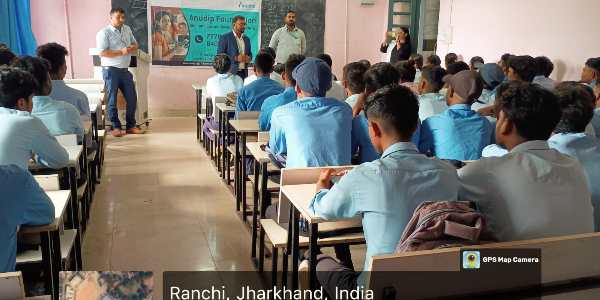
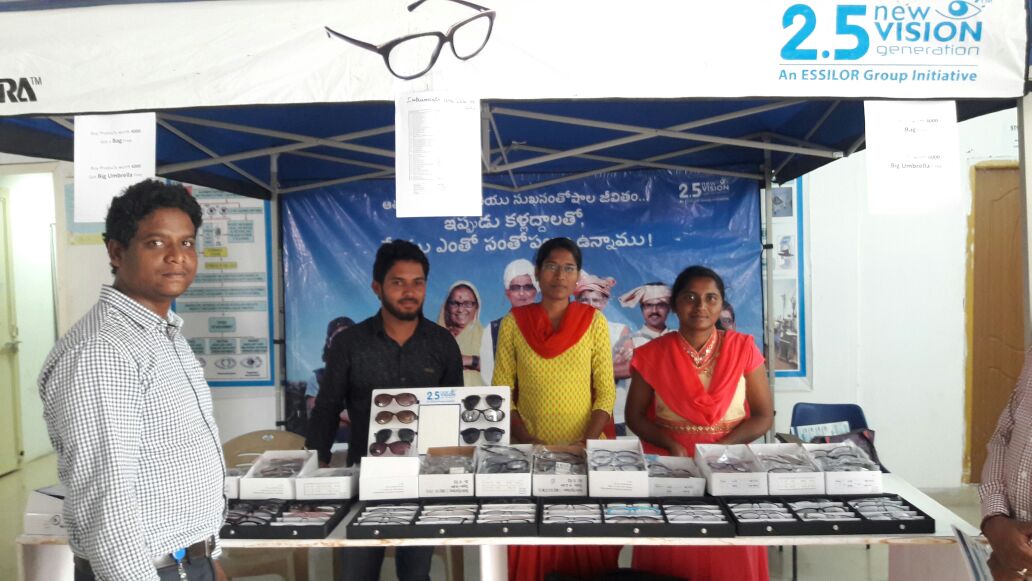
Essilor, world's leading ophthalmic optics company, designs, manufactures and markets a wide range of lenses to improve and protect eyesight and being a key player in visual health has now taken the responsibility of correcting this huge problem. Essilor launched its inclusive business arm (2.5 New Vision Generation) in 2013 with a main objective to provide basic vision care in underserved areas where people do not have access to affordable and quality vision care. 2.5 New Vision Generation (2.5 NVG) started an innovative program called Eye Mitra Optician (EMO). Under the EMO program, unemployed & underemployed rural youth are given 2 months of class room training and 10 months of on job training on basic vision screening and spectacle dispensing. After the successful completion of training these EMOs goes back to their village and start a small optical shop.
This 12-month training is provided absolutely free of cost in dedicated training canters established by 2.5 NVG. The students are also given training in how to run a business and how to handle customer queries. Outstation candidates are provided boarding and lodging facilities free of cost. There is a fixed criteria for the selection of candidates who are trained in these centres. They should be above 18 years, must have passed 12th standard and be able to communicate in the local language. The candidates are also selected keeping in mind the entrepreneurial motivation in them and should be from the areas that are in the periphery of 150-200 kms from the centres. Therefore, after graduating and setting up the businesses, these EMOs can get in touch with the local supervisors on a daily basis, who assist them in running their businesses, conducting Vision screening events and ensuring the business fetches them profit. Thus, 2.5 NVG works to create livelihood opportunities for the rural youth while it solves the problem of access to vision care facilities to rural Indians. The training of youth and motivation for them to run a successful business also ensures that the results are long lasting and sustainable.
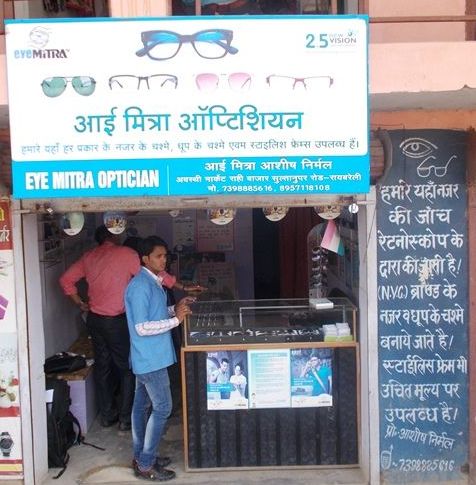
As per 2010 estimate, India needs 115,000 optometrists; whereas the eco-system has approximately 9,000 optometrists (4-year trained) and 40,000 vision correction personnel (2year trained). Out of which the presence of such qualified professionals in rural areas is almost negligible. With 70 percent rural population and a dismal ophthalmologist-patient ratio of 1:100,000 Essilor’s initiative is filling a huge lacuna. The EMO program was started with a pilot in Rajasthan’s Alwar in 2011 and the number has now reached 30 training centres in six different states - Uttar Pradesh, Rajasthan, Telangana, Maharashtra, West Bengal and Karnataka. These 30 centres have produced more than 4,000 eye mitras who have in-turn impacted more than 2 million people who were equipped with spectacles. This means 2 million people now have a clear vision because of Essilor’s initiative and they are leading their everyday lives in a much better way. The company now targets to reach maximum people through 10,000 EMOs by the year 2020.
“Improving access is a challenge that 2.5 New Vision Generation through various initiatives aims to meet. Majority of population living in Rural India have very limited access to basic vision care services. With our Eye Mitra Optician program we will bring in good vision and basic vision care facilities to the door steps of rural India” said Saugata Banerjee (Vice President - South Asia & South East Asia - 2.5 New Vision Generation)
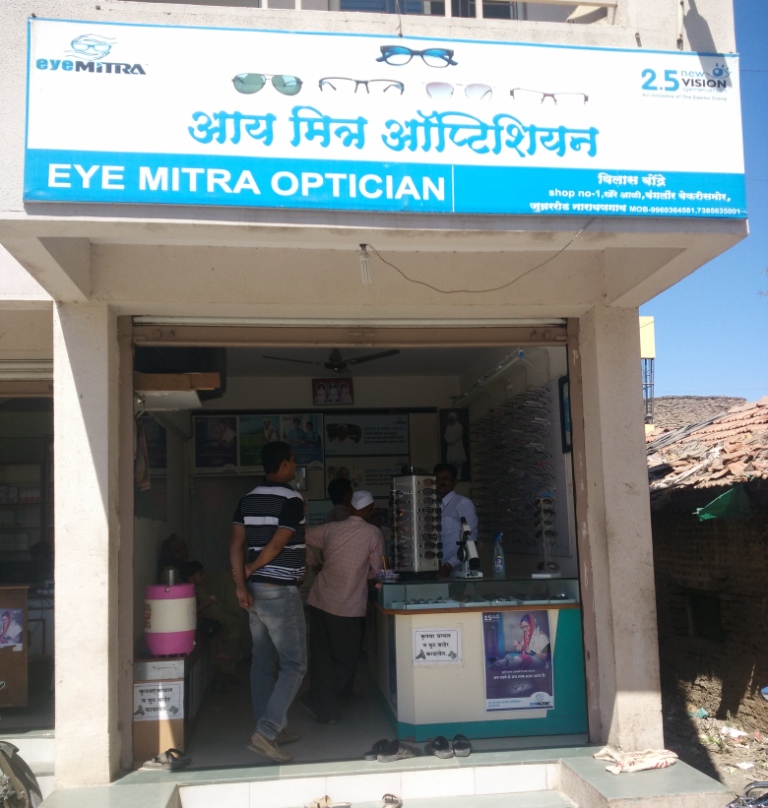
Essilor cites an independent study by Dalberg Global Development Advisors to measure its impact which states that spectacle wearers in India saved an average of 1.5 hours a day on daily tasks such as farming and domestic chores, and experienced increased independence in movement and travel. “The Dalberg study showed a total quantifiable impact of US $4.4 million a year alone in the 6 districts of Uttar Pradesh, India surveyed, representing close to 400 EMOs serving 70,000 spectacle wearers. This amount includes the economic impact of increased earnings for EMO, increased income through improved productivity of wearers as well as revenues for rural suppliers and other small businesses who benefit locally. If the EMO initiative was scaled up to all districts in India, this would represent a total potential impact of US$487 million a year. The scaling up of the EMO program in other Indian states is therefore expected to be making a significant contribution to the country’s GDP,” it states.
To implement the EMO program, 2.5 New Vision Generation also partners with other organisations and government agencies for a better reach and impact. The monitoring and evaluation is carried out regularly by implementing partners too. The company is also planning to launch an app to assist the EMOs in running their businesses. After successful completion of project at one location, the company targets to move the set up to other locations and continue creating an able workforce reaching out to more and more people. It also plans to replicate the model in other countries like China, Cambodia, Indonesia Bangladesh and Vietnam.


More Stories

CSRBOX is India’s leading CSR knowledge and impact intelligence driven media platform for the development community. It serves as an enabler, encouraging collaboration and partnerships between CSR stakeholders. Here, we connect and inform over three million professionals through our online platform, and bridge information gaps by providing a range of services for Corporate, NGOs and Social enterprises, to enhance their capacities, aid collaboration, plan projects, publish knowledge resources, conduct research, amplify their reach and much more.
Submit CSR News
Please submit your CSR news, CSR impact story ideas to us. Our Team will get back to you within 6-12 working hours. You can also email us at info@csrbox.org© Renalysis Consultants Pvt Ltd. All Rights Reserved | Powered by NGOBOX