
Subscribe to our Weekly Newsletter
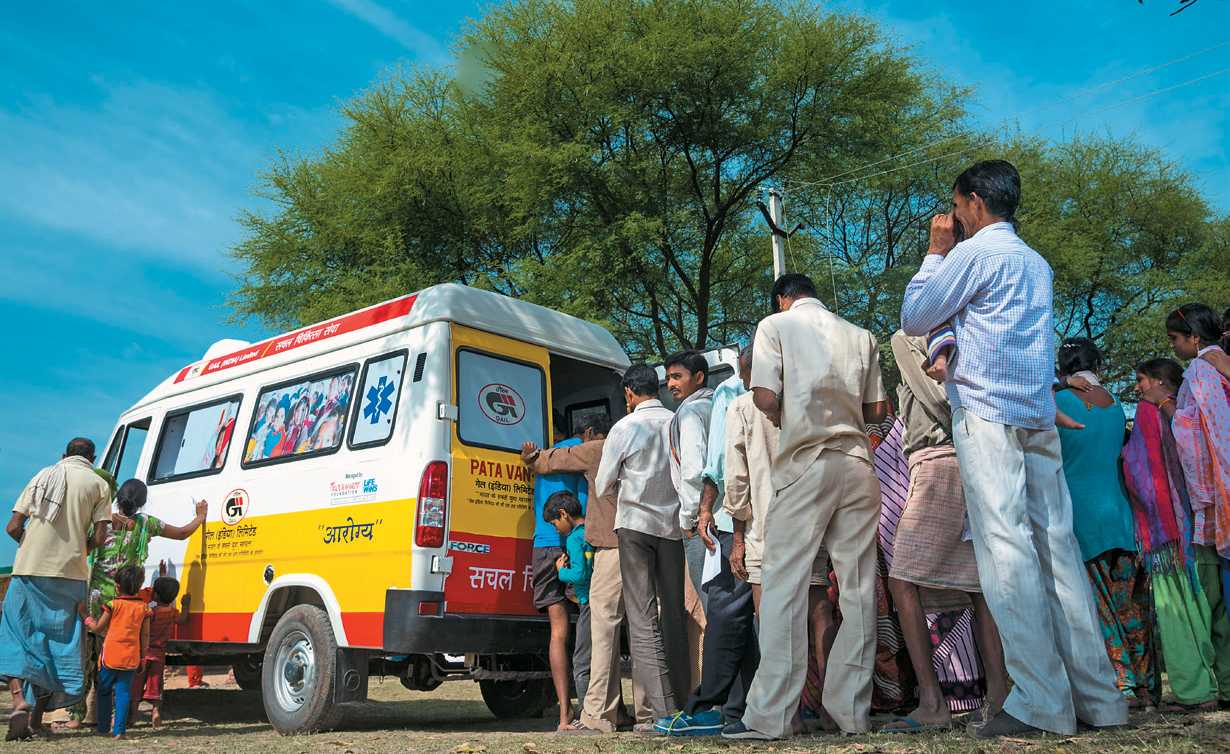
Project Arogya has been providing basic primary healthcare services and facilities through operation of 56 Mobile Medical Units (MMU) covering 2331 villages across 40 districts in 12 states of the country. These MMUs are operated through a highly qualified Team of professionals which include an MCI Registered Doctor, Pharmacist, Nurse and a Lab Technician. These MMUs follow the ADCR Formula – Awareness, Diagnosis, Cure and Referral for providing these doorstep healthcare services and primarily serve the under privileged segment with limited access to the established Public Health Centre facilities, which are often over-burdened.
Following a collaborative and stakeholder approach in implementing CSR, GAIL’s MMU model works together with Gram Pradhan/ Sarpanch/ Key of villages, members of villages’ health sanitation committee (VHSC), ASHA workers, School teachers, Anganwadi workers (AWWs), ward members, PHC’s, etc. for the effective execution of the program. Their participation and cooperation plays an important role in accomplishing smooth MMU operations. Their involvement with the program acts as a link between the MMUs, local beneficiaries and Government. Local community leaders and health practitioners are also invited resource persons for special camps. Regular feedbacks, assessment findings are encouraged from the mobile medical van team and the beneficiary communities at large in order to work towards better impact. Every stakeholder from the initial stages of planning to impact assessment forms a vital strategic partner throughout the project cycle.
Each MMU has a fixed Journey Cycle Plan (JCP) which ensures that the services are reliable for the beneficiaries and increases the footfall. Further, in order to promote and generate awareness on personal hygiene, especially among women whose access to sanitary products is often limited on account of their spatial position as also the social stigma attached to the issue of menstrual hygiene, the GAIL run MMUs distribute ‘Moksha’ –low–cost Sanitary Napkins, free of cost. The initiative has received an overwhelming response from the beneficiaries and has brought in a significant behaviour change among the women beneficiaries, esp. the adolescents.
These MMUs come with a ‘Track & Trace’ mechanism implemented through Embedded Innovative Services (GPS) enabled real-time tracking of the MMUs as each MMU van is fitted with GPS.
18 out of these 56 MMUs are operated in aspirational districts across Assam, Bihar, Jharkhand, Madhya Pradesh, Odisha and Uttarakhand. These GAIL operated MMUs have made access to Primary Health Care easier for people in the most remote rural pockets of the country including tribal belts like Jhabua, MP, LWE (Left Wing Extremists) areas of Jharkhand and hilly terrains of the North-East. The programmes has made healthcare accessible for over 9.5 lakhs in people in FY 2018-19.
Other Projects
Explore Organizations
Explore Innovations

CSRBOX is India’s leading CSR knowledge and impact intelligence driven media platform for the development community. It serves as an enabler, encouraging collaboration and partnerships between CSR stakeholders. Here, we connect and inform over three million professionals through our online platform, and bridge information gaps by providing a range of services for Corporate, NGOs and Social enterprises, to enhance their capacities, aid collaboration, plan projects, publish knowledge resources, conduct research, amplify their reach and much more.
Submit CSR News
Please submit your CSR news, CSR impact story ideas to us. Our Team will get back to you within 6-12 working hours. You can also email us at info@csrbox.org© Renalysis Consultants Pvt Ltd. All Rights Reserved | Powered by NGOBOX




.png)



.jpg)


