

Subscribe to our Weekly Newsletter
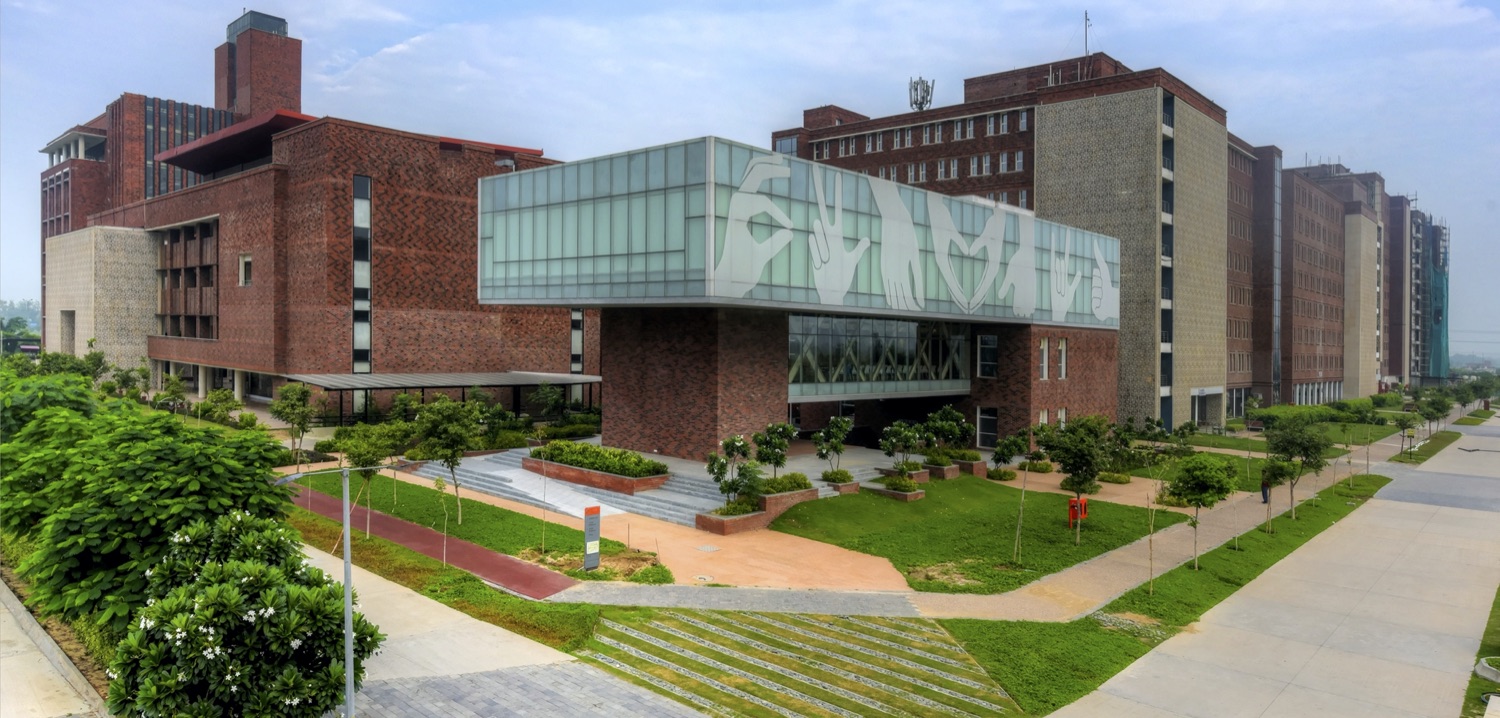
Ashoka University, India’s premier interdisciplinary research university, today announced that two of its Centres of Excellence, the Ashoka Centre for a People-Centric Energy Transition (ACPET) and the Centre for Health Analytics Research and Trends (CHART), have been awarded a prestigious GBP 1.94 million research grant from the UK's Wellcome Trust, one of the world’s foremost philanthropic foundations supporting health research, for a four-year project on the public health impacts of India’s climate mitigation efforts.
The project, launched in March 2026, brings together a leading international consortium of institutions and global experts. It is co-led in Ashoka University by Professor Vaibhav Chowdhary, Director, ACPET, an energy transition and climate change mitigation expert, and Professor Poornima Prabhakaran, Director, CHART, an expert in environmental health, air pollution, climate change and epidemiological research; Markus Berensson, Head of Mitigation Research at C40 Cities, who brings extensive expertise in urban climate strategy and decarbonisation pathways; and Dr Gaurab Basu, Assistant Professor at the Harvard T.H. Chan School of Public Health, Harvard University, whose work focuses on climate change, health equity, and medical education. Together, the consortium aims to examine how India’s climate mitigation pathways can generate measurable public health benefits across national, urban, community, and household scales.
Designed in collaboration with policymakers and practitioners, including NITI Aayog, the project integrates expertise across climate policy, air pollution, public health, energy transitions, and behavioural interventions. The partnership leverages the complementary strengths of the collaborating institutions to drive policy impact. ACPET brings expertise in people-centric energy transitions and just transition pathways, such as its ongoing project to transition coal mine communities towards sustainable lives and livelihoods in Rajhara, Jharkhand. CHART contributes its strengths in PM2.5-health modelling and the integration of epidemiological data. Together, the partners are also working to embed research-driven tools within government systems such as NITI Aayog’s India Energy Security Scenarios (IESS) 2070 framework, enabling multi-scalar, stakeholder-informed outcomes to support evidence-based climate and public health policymaking.
As India pursues its ambitious climate commitments, including its Net Zero by 2070 target announced by Prime Minister Narendra Modi at COP26 in Glasgow, this project seeks to strengthen the evidence base linking climate action with public health outcomes. Recognising that India’s climate and development pathways are deeply interconnected with the health and well-being of its population, the initiative places strong emphasis on evidence generation and policy engagement. The project seeks to demonstrate how climate mitigation strategies from urban decarbonisation to clean cooking transitions can generate meaningful public health co-benefits, reduce disease burdens, and support inclusive and sustainable development.
The consortium formally convened its first in-person project meeting in Mumbai on 8 June, marking the commencement of collaborative activities under the Wellcome Trust-funded initiative.
Speaking on the project, Vaibhav Chowdhary, Director, ACPET, Ashoka University, said, “In an increasingly geopolitical world, national developmental priorities are being recalibrated, particularly pertaining to the impacts of climate change. Our project aims to bridge the science of climate and health by generating actionable evidence that safeguards the lives and livelihoods of vulnerable communities while enabling resilient, inclusive, and low-carbon growth.”
Professor Poornima Prabhakaran, Director, CHART, Ashoka University, added, “This multi-institutional collaborative project will provide nuanced insights into the health and economic co-benefits of India’s energy transition at the national, city, and community level. We hope the findings from exploring the energy-health nexus will provide meaningful pathways to beneficial societal impact and health of our population at large.”
Somak Raychaudhury, Vice-Chancellor, Ashoka University, Delhi-NCR, said, “This recognition from the Wellcome Trust is a significant milestone for Ashoka University and reflects our commitment to building a rigorous ecosystem of interdisciplinary research. Initiatives such as this bring together science, policy, and societal impact and reinforce our belief that universities must play a central role in addressing complex global challenges. We see this as an opportunity to further strengthen our research capabilities and inspire the next generation of scholars to pursue work that is grounded in both academia and society.”
Over the course of four years, the collaboration is expected to have significant implications for policy, urban governance, clean energy transitions, and community health, while further strengthening ACPET’s and CHART’s positions as globally engaged, policy-oriented research centres. Through actionable, evidence-based solutions, the project aims to advance equitable public health outcomes, support a people-centric and sustainable energy transition, and contribute to cutting-edge epidemiological research on population health in India.
About Ashoka University, Delhi NCR:
Ashoka University is a premier interdisciplinary higher education and research-focused institution, offering world-class opportunities in the natural sciences, social sciences, and humanities. Established in 2014 by leaders, thinkers, academics, and philanthropists from diverse fields, it operates on a unique model of collective philanthropy, blending the finest governance practices with cutting-edge pedagogy and an internationally reputed faculty.
Today, the University has a community of 3000+ students, and operates 20+ dedicated Centres of Excellence, producing research and interventions for impact in areas such as public health and disease control, energy transition, digitisation of society, and women empowerment, among other areas of public policy. The University stands for principles of inclusivity and diversity, having more than 57% women, 4% international scholars, 100+ specially abled students, and over 47% students on scholarships. It is a non-profit university established under the Haryana Private Universities Act (2006).
For further information, please visit www.ashoka.edu.in


CSRBOX is India’s leading CSR knowledge and impact intelligence driven media platform for the development community. It serves as an enabler, encouraging collaboration and partnerships between CSR stakeholders. Here, we connect and inform over three million professionals through our online platform, and bridge information gaps by providing a range of services for Corporate, NGOs and Social enterprises, to enhance their capacities, aid collaboration, plan projects, publish knowledge resources, conduct research, amplify their reach and much more.
Submit CSR News
Please submit your CSR news, CSR impact story ideas to us. Our Team will get back to you within 6-12 working hours. You can also email us at info@csrbox.org© Renalysis Consultants Pvt Ltd. All Rights Reserved | Powered by NGOBOX


