
Subscribe to our Weekly Newsletter
More Organizations

Last Updated on October 13, 2022
Operation in state
Thematic Areas
Tax Compliance Eligibility

Established In 2013
Registration No. :CSR00003071
About the organization
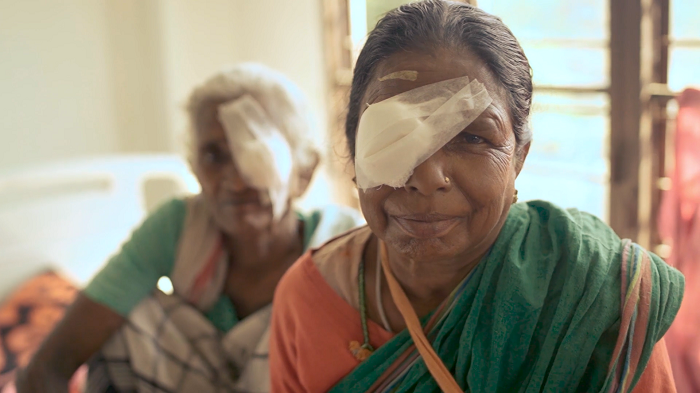
Operation Eyesight India is a non-governmental organization with its head office in Hyderabad. It is part of Operation Eyesight Universal, a Canada-based international development organization working to prevent blindness and restore sight in South Asia and sub-Saharan Africa. Founded in 1963 to address the backlog of cataract surgeries in India, Operation Eyesight now has comprehensive eye health programmes in eight countries. Common eye issues that we see in these countries include cataracts, trachoma, eye cancer, diabetic retinopathy, glaucoma, macular degeneration, and uncorrected refractive error, among others. When people suffer from poor eye health, their quality of life is diminished and the cycle of poverty is perpetuated. By creating access to affordable eye health care services and addressing the root causes of avoidable blindness, we create a lasting impact in our communities of work – For All The World To See.
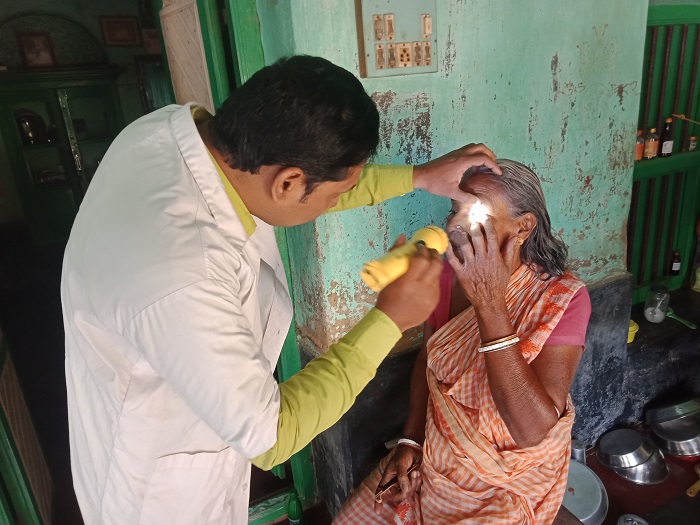
In India, we are currently working with 35 partner hospitals (including government health departments and eminent universities) across 18 states, covering over 90 underserved districts. To date, we have established 145 Vision Centers, 18 Advanced Vision Points, and 37 Vision Points, and declared over 1,072 villages as avoidable blindness-free. In 2021 through our initiatives, nearly 700,000 people received a comprehensive eye examination, nearly 160,000 patients received sight-saving surgery and over 180,000 pairs of prescription eyeglasses were dispensed.
For More Info....
Special features of the organization
Our work in India falls into four thematic programming areas:
Why should a corporate partner with organization?
According to the 2019 World Report on Vision, at present, at least 2.2 billion people around the world have a vision impairment, of whom at least 1 billion have a vision impairment that could have been prevented or is yet to be addressed. Overall potential productivity losses of moderate and severe vision impairment and blindness were estimated at $408.5 billion PPP, 0.5% lower than estimates using GDP. As per projected changes in vision loss from 2020 to 2050; the vision loss will increase by 55% or 600 million people. By 2050, the number of people over 65 will almost double; this is concerning as the prevalence of vision loss increases rapidly with age. The World Report on Vision recommends an integrated people-centered programming approach with eye care as an integral part of healthcare delivery systems, supported by high-quality research and community engagement for desirable outcomes.India contributes to 21% of the world’s blind population and 22% of the world’s visually impaired population. Up to 90% of these people are suffering from avoidable blindness, which means their condition can be treated or could have been prevented.
Eye health is one of the most neglected areas of India’s public health care delivery systems and suffers more acutely from the traditional challenges of a lack of adequate funding, appropriate infrastructures, human resources, service delivery tools, models, accountability, and integration into existing public health systems.The two major challenges that are adversely affecting eye care in India are inadequate facilities and a lack of access. In India, there are 16 ophthalmologists per million population and the ratio of ophthalmic assistants is 7 per million population. With a population of more than 1.32 billion people, this means a serious shortage of medical professionals leading to a severe limitation in both the screening and treatment of eye conditions in the country. While there are regions that have a ratio of 1:9,000 (mostly urban centers), some regions have a ratio as low as 1:608,000. The uneven distribution of surgeons, compounded with the underutilization of their skills and the unavailability of optometrists for basic procedures, has resulted in an unabated increase in avoidable blindness, despite all the efforts made so far by the government, private sector, and civil society organizations.Recognizing the critical need for eye health services, the Government of India included eye health in its service delivery package under its ambitious “Ayushman Bharat” program, but there are many gaps in the program that need to be addressed, including gaps in policy development, referral mechanisms, and supply chain management. The situation in India is further exacerbated by limited financial and human resources, inadequate eye health facilities, a lack of trained eye health care personnel in rural areas, and a lack of access to eye care services.
Operation Eyesight is partnering with Government bodies and partner eye hospitals to address these issues. With the participation of the corporate, the elimination of avoidable blindness from fellow Indias can be achieved at a greater scale at a faster pace. This will allow for better living conditions, enhanced livelihood, and overall increased productivity of the society; thus boosting the economy and progress of the country.
Chief Functionary
Contact
Project Detail of Organization

Other organisations
Other products
More Organizations

CSRBOX is India’s leading CSR knowledge and impact intelligence driven media platform for the development community. It serves as an enabler, encouraging collaboration and partnerships between CSR stakeholders. Here, we connect and inform over three million professionals through our online platform, and bridge information gaps by providing a range of services for Corporate, NGOs and Social enterprises, to enhance their capacities, aid collaboration, plan projects, publish knowledge resources, conduct research, amplify their reach and much more.
Submit CSR News
Please submit your CSR news, CSR impact story ideas to us. Our Team will get back to you within 6-12 working hours. You can also email us at info@csrbox.org© Renalysis Consultants Pvt Ltd. All Rights Reserved | Powered by NGOBOX


.png)


.jpg "Science & STEM Park Products")


