


Subscribe to our Weekly Newsletter
More Organizations
Last Updated on December 3, 2019
Operation in state
Thematic Areas
Tax Compliance Eligibility

Established In 1998
About the organization
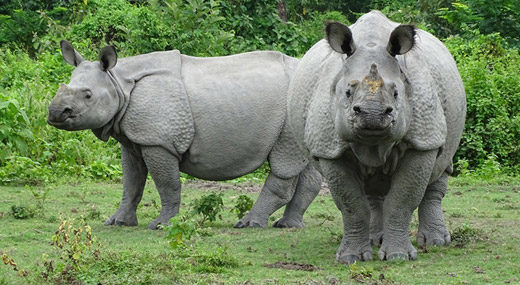
Wildlife Trust of India (WTI) is a leading Indian nature conservation organization committed to the service of nature and effective action for the protection of India's natural heritage. Our Mission is to conserve wildlife and its habitat and to work for the welfare of individual wild animals, in partnership with communities and governments.
WTI began its operations in 1998 and in 20 years, has grown into one of India’s leading conservation action organizations. Our principal objectives include managing or preventing wildlife crises, mitigating threats to individual wild animals, their populations and habitats through holistic strategies, practical interventions, education, and awareness. Supported by individual donors, funding agencies and key corporations like IUCN, Ministry of Environment Forest & Climate Change, Department of Forest Uttar Pradesh, IFAW (International Fund for Animal Welfare), UNEP, Elephant Family, HCL Foundation, US Fish and Wildlife, CAF India, The Rufford Foundation, David shepherd WildlifeFoundation, ONGC, Tata Trust, Oil India, Oracle, Tata Chemicals, Apollo and many more.
WTI today is tackling a diverse range of wildlife issues around the country. We rescue, rehabilitate and release displaced and orphaned wild animals back to the natural habitats; we work with communities and governments; we employ science and ecology to bring back populations of endangered species; we secure wild habitat through time-tested proven methods, and we train, equip and support India’s frontline forest staff.
For More Info....Special features of the organization
The working principles of WTI centres around the below stated 9 big ideas -
i) Wild Aid: Providing short term, focused and innovative aids during emergencies and eradicating conservation issues by providing game changing solutions to age old problems.
ii) Enforcement and Law: Combating key wildlife offences like poaching and trading of animals and their body parts using trade control, litigation and capacity building.
iii) Green Livelihoods: Providing suitable alternate livelihoods to local communities dependent on forest products for their survival.
iv) Species Recovery: Recovering populations of threatened species or sub species by considerably ameliorating their national or global status of threat through direct conservation methods.
v) Protected Area Recovery: Improving the prevailing functionality of protected areas and thereby restoring their ecological integrity.
vi) Wild Rescue: Increasing the welfare of individual displaced animals by providing suitable health care and rehabilitation measures across the country.
vii) Conflict Mitigation: Demonstrating innovative and replicable models of Human Wildlife Conflict reduction to catalyze changes in policy making.
viii) Natural Heritage Campaigns: Creating positive and fathomable changes and raising people’s awareness about wildlife and conservation in general through planned campaigns.
ix) Wild Lands: Securing critical habitats outside the traditional protected area system, especially habitat linkages, wetlands, grasslands, community reserves, important bird areas, sacred groves, thus increasing the effective protected area network of India.
Why should a corporate partner with organization?
Over the past 20 years, Wildlife Trust of India has achieved some prominent milestone.
Contributing to the conservation of wildlife and its habitats is a wonderful way to allocate a company's mandatory CSR spend.With the passage of the Companies Act, 2013, the mandate for Corporate Social Responsibility (CSR) has been formally introduced to the dashboard of the Boards of Indian companies. Schedule VII of Section 135, Point no. (iv) of the Act covers CSR spending on ensuring environmental sustainability, ecological balance, protection of flora and fauna, animal welfare, agroforestry, conservation of natural resources and maintaining quality of soil, air and water.Over the past 20 years, Wildlife Trust of India has achieved some prominent milestone.
Chief Functionary
Contact
Project Detail of Organization

.jpg)


Other organisations
Other products
More Organizations

CSRBOX is India’s leading CSR knowledge and impact intelligence driven media platform for the development community. It serves as an enabler, encouraging collaboration and partnerships between CSR stakeholders. Here, we connect and inform over three million professionals through our online platform, and bridge information gaps by providing a range of services for Corporate, NGOs and Social enterprises, to enhance their capacities, aid collaboration, plan projects, publish knowledge resources, conduct research, amplify their reach and much more.
Submit CSR News
Please submit your CSR news, CSR impact story ideas to us. Our Team will get back to you within 6-12 working hours. You can also email us at info@csrbox.org© Renalysis Consultants Pvt Ltd. All Rights Reserved | Powered by NGOBOX


.png)


.jpg "Science & STEM Park Products")


